Typical bill will surge by £220 a year from Wednesday, forcing 13.5m homes to spend over 10% of income on fuelMillions of households in Great Britain will be pushed into fuel poverty after months of volatility on the global gas markets as energy bills rise by more than £220 a
 Jillian Ambrose



Millions of households in Great Britain will be pushed into fuel poverty after months of volatility on the global gas markets as energy bills rise by more than £220 a year under the government’s price cap from Wednesday.
As the cap on gas and electricity rates rises to the equivalent of £1,862 a year, the number of households forced to spend more than 10% of their income on energy bills will increase to 13.5m from almost 11.3m in April, according to fuel poverty campaigners.
The End Fuel Poverty Coalition warned that the steepest summer rise in energy charges in four years would leave almost 5.5m homes facing energy bills of about 20% of their income, up sharply from 4.3m in April this year. The charity calculated the figures based on research by the University of York.
Simon Francis, the coordinator of the End Fuel Poverty Coalition, said: “These figures show the reality behind the headline price cap figure: a growing number of households are spending an unsustainable share of their income just to heat their homes in winter and keep them cool in summer.”
Francis added that the situation could get worse. “With energy costs rising over the summer, any chance households had to reduce energy debts or build up reserves before the winter heating season will be wiped out,” he said.
Under the new cap, electricity rates will rise from 24.67p a kilowatt hour to 26.11p, and gas charges will rise from 5.74p to 7.33p, for households that pay via direct debit.
This is the equivalent of an annual dual fuel bill of £1,862 for the typical UK household, under the energy regulator’s previous methodology. Using new calculations, which assume lower energy consumption, the regulator believes the average UK household will spend £1,663 a year from July.
Energy bills are likely to remain high as the cooler months begin, according to energy analysts at Cornwall Insight. This is expected to have a greater impact on households as gas use increases with the drop in temperatures.
The consultancy forecast that from October the average bill could be £1,654, using the regulator’s new assumptions, representing a 0.5% reduction from July.
The surge in energy costs has reignited calls for the government to tackle Britain’s energy affordability crisis. The union Unite has planned protests across the country to call for “an immediate and deep cut” to energy costs and a plan to renationalise energy companies.
Sharon Graham, Unite’s general secretary, said: “The increase in the energy cap is another kick in the teeth for workers and families who were already struggling with ever rising bills and the cost of living crisis. The UK has among the highest energy bills in Europe, they should be going down not up.”
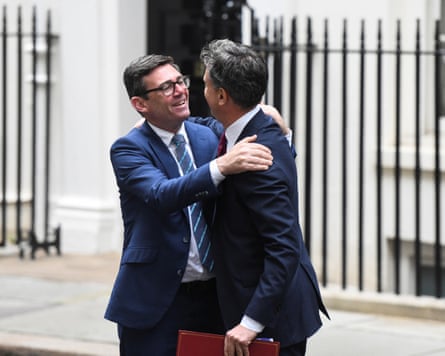
Andy Burnham, the Labour MP widely expected to be the next prime minister, used his first big public address on Monday to set out a long-term ambition for local leaders to have greater public control of essential services, including energy, to help curb the cost of living.
Francis said: “If it is to be Andy Burnham as the next PM with his vision of a rewired Britain, then new ministers must also rewire how energy bills are set. Plans to devolve control of energy will count for nothing unless they are accompanied by a permanent social tariff, an end to energy debt, reduction of electricity costs and a credible plan to break the link between gas and electricity prices.”
Martin McCluskey, the minister for energy consumers, said: “We know families are deeply concerned about rising energy bills because of a war we did not choose, and we are determined to fight their corner to tackle energy affordability.”
The government has removed some policy costs from home energy bills and expanded its warm home discount scheme to benefit 6m households.
McCluskey said it would continue to monitor the situation before the winter “and plan for all contingencies, while doubling down on our mission for clean power to bring down bills for good”.