The cost of services like haircuts, restaurant meals, plumbers, and hotel stays also rose faster in recent months, from three to 3.5 percent, suggesting price pressures are spreading beyond just energy and food.
 Wester van Gaal



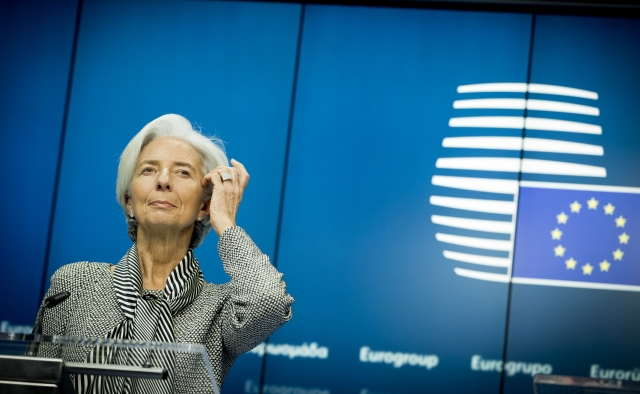
The European Central Bank (ECB) raised borrowing rates by 0.25 percent on Thursday (11 June) because energy related inflation has started to spill through the wider economy.
Inflation has risen steadily since the US-Israeli war began in February and oil and overseas gas supplies were disrupted, pushing up prices.
“We have endured a major energy shock, far longer than anything geopolitical experts expected and we are seeing a broadening effect throughout the economy,” said ECB president Christine Lagarde on Thursday.
Its main deposit rate is now at 2.25 percent.
The bank projects inflation this year to average three percent, or 2.5 percent if energy and food prices are stripped out.
The cost of services like haircuts, restaurant meals, plumbers, and hotel stays also rose faster in recent months, from 3 to 3.5 percent, suggesting price pressures are spreading beyond just energy and food.
The challenge the bank faces is deep uncertainty about where inflation and growth are heading, since both depend on how long the war lasts and how severe the energy shock turns out to be.
That uncertainty is reflected in the wide spread of outcomes across the bank’s three updated staff scenarios, also published on Thursday, which range from mild, adverse, and severe.
Mild depicts a quick resolution to the conflict; adverse sees inflation tick higher, and severe is a prolonged disruption in the gulf with oil price levels that lower growth by a further 0.3 percent.
“We are clearly not in the mild scenario anymore,” Lagarde said, but stopped short of saying on which track the EU is.
ECB board member Isabel Schnabel said last month that the energy shock has already “moved beyond the adverse scenario which assumed a rapid normalisation of oil prices.”