The Dutch defence minister during the fall of Srebrenica in 1995 tells BIRN he tried in vain to shore up the Dutch battalion stationed in the UN ‘safe area’, and blames himself, his government, and its Western allies for failing to protect it.
 Marjolein Koster



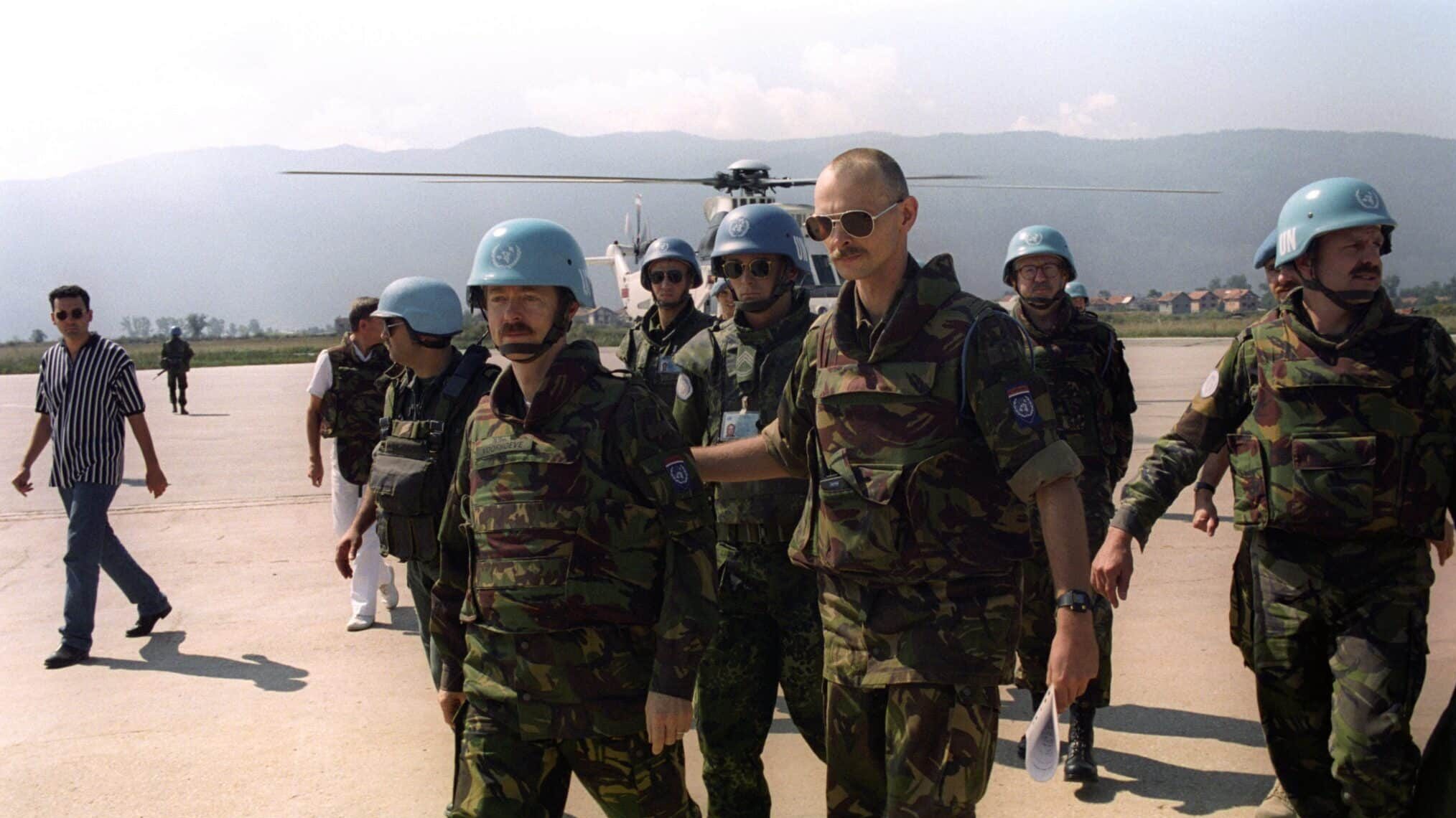
Despite the surfacing of such facts and years of study by organisations such as the Netherlands Institute for War Documentation, NIOD, the official Dutch narrative has remained centred on the idea that the Dutch battalion was powerless to prevent Srebrenica’s fall.
Now, however, a more critical position has emerged through research by historians affiliated, perhaps ironically, with the Dutch Ministry of Defence and published in Militaire Spectator, a ministry-affiliated magazine.
“Within the ministry, there is an apprehension about offending Dutchbat veterans,” said Lieutenant-Colonel Dion Landstra, one of the researchers.
“But we have made it clear: it is not about the veterans. They were sent on a mission doomed to fail. On the other hand, when veterans say, ‘We couldn’t do anything, we weren’t allowed’, that is simply not true. We cannot keep saying, ‘This just happened to us’,” said Landstra. “People preferred to blame the UN, but it is important that we now have a conversation about our own responsibility.”
With time, the space for self-reflection is growing.
“Srebrenica teaches us that international mandates are only effective when accompanied by political will and moral clarity,” said Landstra. “We must learn from our mistakes instead of closing our eyes to this painful history.”
Last year, the same researchers published a critical piece challenging the narrative of inevitability by focusing on the “narrow, restrictive” interpretation of the UN peacekeeping mandate.
UN Resolution 836 explicitly authorised UNPROFOR troops to use force to defend the safe areas, force that was indeed used in Gorazde, Bihac, and Tuzla.
The authors conclude that the choice of passivity in Srebrenica was not an unavoidable necessity, but rather the result of an administrative culture that favoured extreme caution in crisis management.
Landstra is critical of the NIOD’s findings from 2002.
“The NIOD report protected the army leadership to a great extent,” he said. “How is it possible that in all the time Dutchbat was in Srebrenica, no new risk assessment was made? Legally, much was possible, but the choice was made not to deploy heavier weapons.”
“A major explanation lies in the troubled relationship between the strategic level at the ministry and the operational reality of the army: political risk aversion translated into a narrow military interpretation of the mandate, which made available options appear less realistic than they actually were.”
Whether heavier weapons or a more proactive use of force would have prevented the genocide remains a matter of historical debate.
But Landstra is adamant: “The Netherlands proved insufficiently willing to accept the level of risk that a civilian protection mission could require. Wearing the green uniform sometimes means accepting risks that cannot be entirely avoided.”
Voorhoeve says he is past trying to justify his actions but wants lessons to be learned for the future.
“I think about it almost every day,” he told BIRN.
“A vast number of men and boys were shot, and that should not have happened. I am revealing this information as part of a quest to understand what should have been done differently, which is vital for similar situations elsewhere in the world.”