




As warnings of possible provocations from Moscow pile up, a system of ditches, trenches and bunkers is beginning to take shape along the 950-km border that the Baltic states share with Russia.
 Tomáš Hrivňák



This story is a part of the weekly newsletter about security, defence, and tech in the eastern flank of Nato, How we cee it.
Along the Baltics’ 950-km border with Russia, excavators are digging anti-tank trenches and engineers are placing concrete “dragon’s teeth.”
The Baltic Defence Line, which Latvia, Lithuania and Estonia agreed upon two-and-a-half years ago, is beginning to take shape.
The Baltic Defence Line is expected to link with Poland’s East Shield programme, a defence and deterrence project that aims to strengthen security along the country’s northern and eastern borders by 2028.
With Russia for a neighbour, the Baltic states are under mounting pressure. Just last Wednesday (15 July), Lithuania’s president Gitanas Nauseda said intelligence assessments suggest Russia is planning potential attacks on critical infrastructure in the Baltic states or Poland.

The reasoning for building the physical barrier is that the war in Ukraine has shown that taking back already-conquered territory is extremely difficult and comes at great cost in human lives, time and material resources. In addition to equipment, ammunition and manpower, physical installations are needed to defend the countries efficiently.
So, just as Ukraine built its Fortress Belt to protect the Donetsk oblast, the Baltic countries are digging in to protect themselves from Russia.
The works are ramping up.
Just last week, VAS, the largest manager of the state real estate in Latvia concluded contracts for the first priority works in the construction of the Baltic Defence Line’s anti-mobility infrastructure.
According to the ministry of defence, construction will begin in the coming weeks on Latvia’s eastern border, including anti-tank ditches, the infrastructure necessary for deploying material and technical resources, and communication towers, strengthening the defence of Latvia’s border.
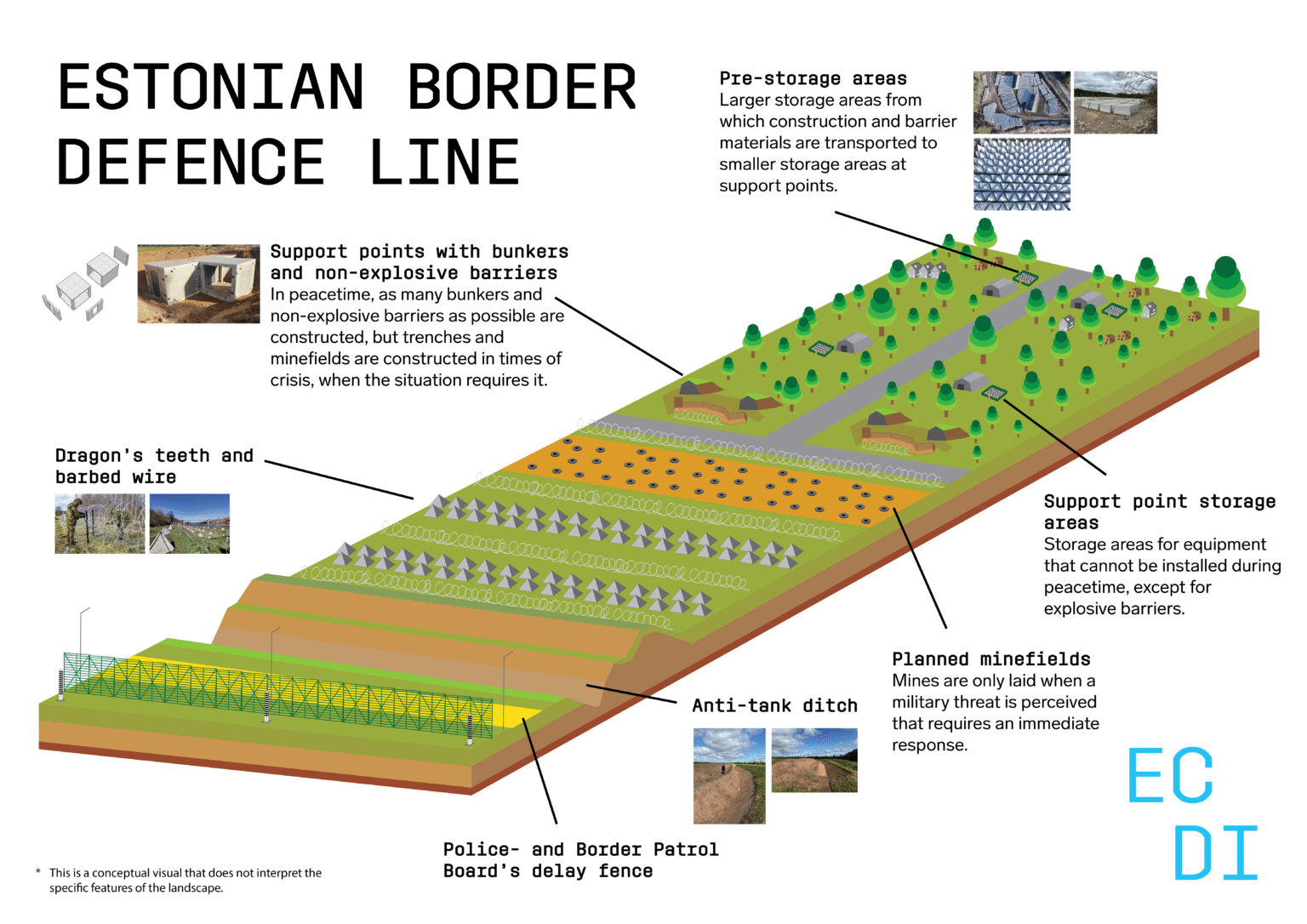
The line, despite the name, is not a single continuous line of fortifications, the defence website Baltic Sentinel explains.
In fact, it is not even intended to hold back an invasion by itself. The emerging system is a layered military landscape made up of anti-tank ditches, concrete “dragon’s teeth,” roadblocks, bunkers, prepared bridge demolitions, equipment depots, natural barriers, mines in wartime and firing positions from which defenders could attack a force delayed by the obstacles.