Information Commissioner said complaints about the lack of response to public inquiries have risen significantly – and 215 public authorities have failed to submit any reports on implementing the Right of Access to Information Act for years.
 Vuk Tesija



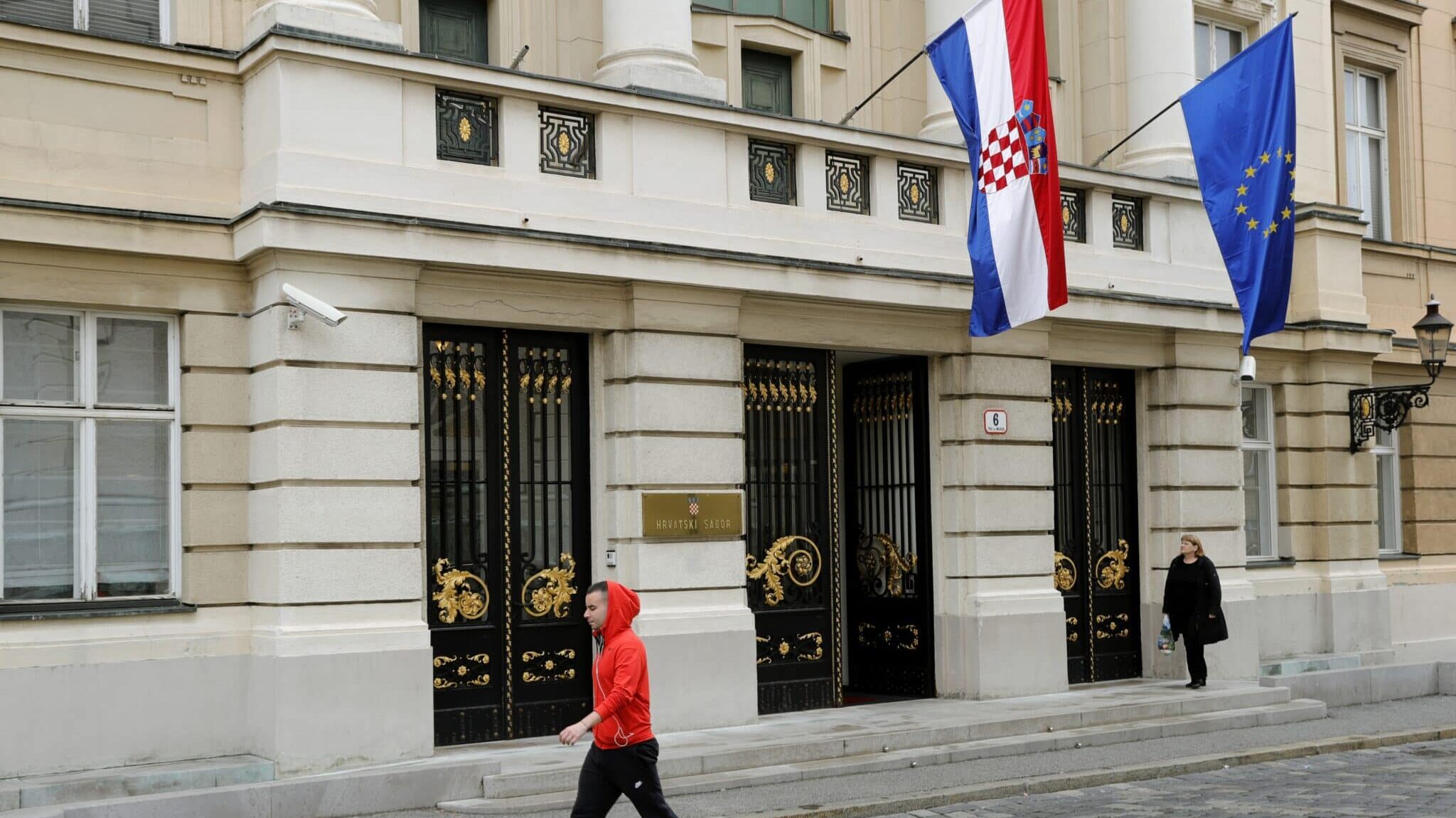
The Croatian Parliament in Zagreb. Photo: EPA/ANTONIO BAT.
More than half of the complaints filed to Croatia’s Information Commissioner last year related to administrative silence – authorities not responding at all to requests from the public, Information Commissioner Anita Markic told parliament on Wednesday.
The Commissioner received a total of 1,320 complaints in 2025, which is an increase of 33.7 per cent compared to 2024, Markic said. Of all complaints received, 51.6 per cent were about the lack of response to requests for information.
Presenting the “Report on Implementation of the Right of Access to Information Act” for 2025, Markic also told parliament that 92 per cent of all obligated entities, which included 5,740 public authorities, submitted annual reports.
But she revealed that 215 public authorities have failed to submit reports on their implementation of the Right of Access to Information Act for five consecutive years – mainly fire departments, veterinary stations and some educational institutions.
Maja Sever, president of the Union of Croatian Journalists and the European Federation of Journalists, said the report shows that Croatia still has a problem with the transparency of public authorities.
“For years, 200 public authorities have not fulfilled even the basic legal obligations related to access to information,” Sever told BIRN.
“Is anyone offering serious measures to ensure that the rights of citizens and journalists to timely and complete information are respected?” she continued, adding that, for journalists, access to information is a basic prerequisite for performing work in the public interest.
“When institutions remain silent, investigative journalism becomes more difficult, the detection of irregularities slows down and the ability of citizens to monitor the work of those who manage public money and make decisions on their behalf is reduced,” she said.
Markic said that “it is necessary to review … the scope of entities obliged to apply the law in the future,” explaining that she did not necessarily mean reducing the number of obligated entities but possibly defining obligations differently, depending on the category of bodies and their capacities.
Over the course of last year, 20,453 requests for access to information were received, 8 per cent more than in the previous year. At the same time, 64 per cent of the bodies that submitted a report did not receive a single request, while just three bodies received one-fifth of all requests. According to the report, one-fifth of public authorities have not received a single request for access to information for five consecutive years.
Public authorities resolved 88 per cent of requests within the statutory deadline, and in 69 per cent of cases, users were granted access to the requested information.
Markic said abuse of the right to access information remains a frequently cited reason for rejecting requests. She cited the example of the Municipality of Seget, which rejected 99 per cent of requests for information as an abuse of rights.
Sever argued that “sanctions against institutions that systematically ignore their legal obligations should be applied”.
“The public’s right to know is not an administrative formality and we cannot agree to just stating that the situation is not good, it is necessary to initiate concrete measures,” she said.