

Parliamentary resolution supporting separate electoral unit for Bosnian Croats causes controversy but is seen as largely symbolic and driven mainly by domestic coalition politics.
 Vuk Tesija



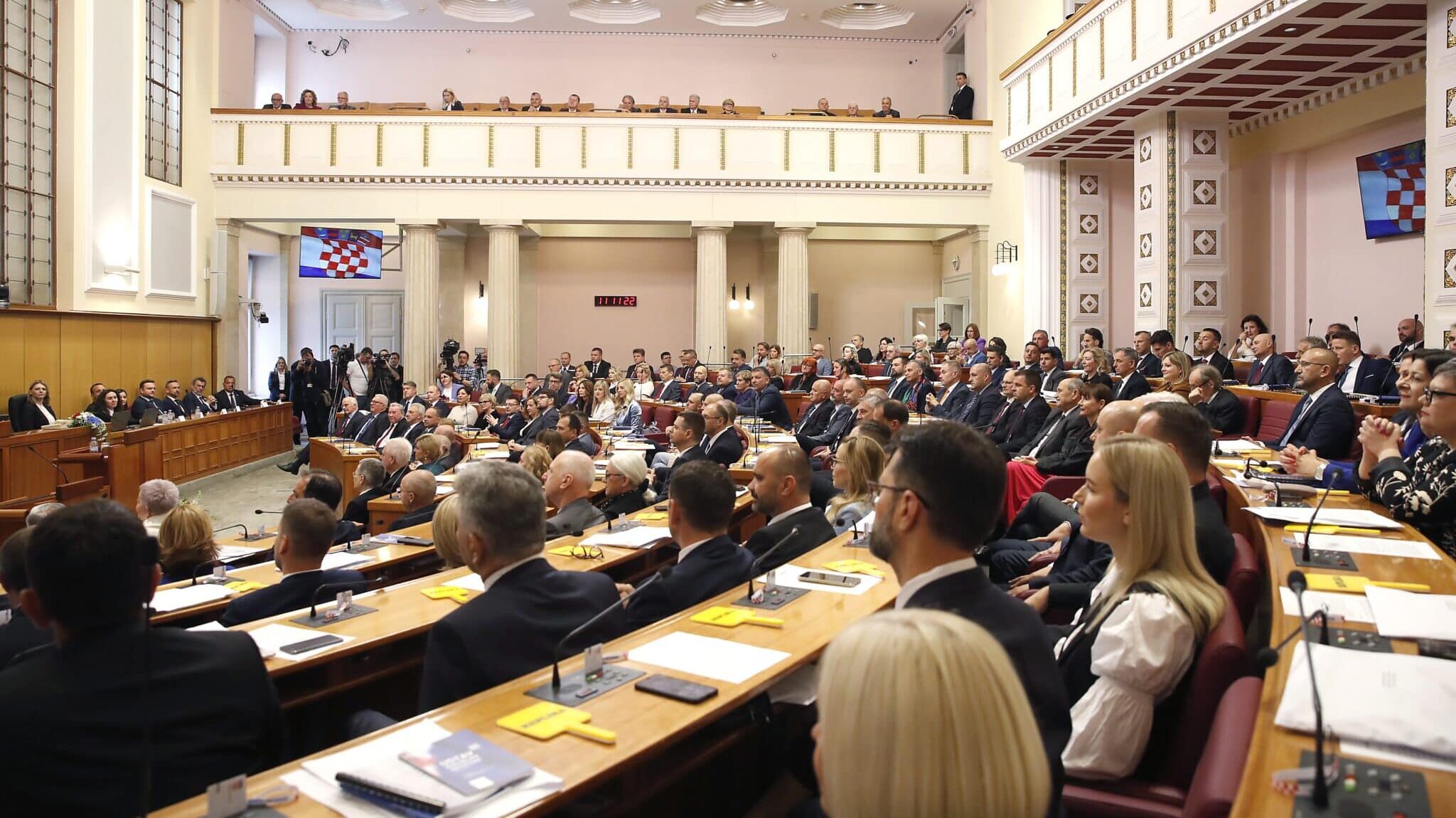
The first session of Croatia’s parliament after the parliamentary elections, May 2024. Photo: EPA/ANTONIO BAT.
The Croatian parliament on Wednesday adopted a resolution proposed by the far-right Homeland Movement, which the party’s president and deputy speaker of parliament, Ivan Penava, said sends a message that Croatia will not stand by while the “electoral will” of Croats in Bosnia and Herzegovina is “overridden”.
The resolution urges the Zagreb government to continue supporting “full political equality” for Croats in Bosnia and Herzegovina, including electoral reforms and also “the proposal to establish a separate electoral unit for the election of the Croatian member of the Bosnia and Herzegovina Presidency”.
Under the current system, Bosnian Serbs in the country’s Serb-majority entity elect one of three members of the Bosnian state presidency. However, elections for the other two presidency posts, in the Federation entity, are open to Bosniaks and Croats – meaning that the numerically greater Bosniaks can elect both members, in practice.
The parliamentary resolution was supported by 83 out of 151 MPs, while three abstained and one voted against. The centre-left opposition parties did not participate in the vote.
Independent MP Nino Raspudic said on the eve of the vote that the resolution had been watered down, but he was supporting it “because it is important to us that the Croatian issue [in Bosnia] is addressed.”
Even the leaked draft of the resolution caused a controversy in Bosnia, as it touches on the constitutional order that was established by the war-ending Dayton peace accords signed in 1995.
The resolution preamble notes the historical role of the self-proclaimed, unrecognised statelet, the Croatian Republic of Herzeg-Bosnia, established during the 1992-95 Bosnian war. Its legacy remains highly controversial, not least because detention camps for Bosniaks operated in territory under its control and senior political and military leaders were convicted by the Hague Tribunal
Wednesday’s vote was preceded by a heated parliamentary debate in which the head of the party representing Croatian Serbs, Milorad Pupovac, warned against “reaching for the Croatian-Bosnian-Herzegovinian cards. Don’t do that – because they are more dangerous than all the cards you have had the opportunity to play with so far.”
However, political analyst Davor Gjenero said the resolution would have no practical impact on Bosnia and was primarily an internal matter for Croatia’s governing coalition, made up of the Croatian Democratic Union, HDZ, and the Homeland Movement.
“They have done enormous damage to Prime Minister and HDZ president Andrej Plenkovic because they have put him in an awkward position with his European partners, while also appealing to the right wing of the HDZ, which is sympathetic to such ideas,” Gjenero told BIRN.
The Prime Minister had even considered breaking up the coalition and reshaping the parliamentary majority, he noted.
“He ultimately did not take that step but he did manage to remove from the resolution much of the rhetoric referring to Herzeg-Bosnia and the dangerous narrative about dividing Bosnia and Herzegovina, so the resolution is no longer alarming,” Gjenero said.
“It contains this sentence about a separate electoral unit for Croats but that has no real substance,” he added.
The first unofficial version of the resolution that was leaked a month ago and caused controversy in Bosnia contained much harsher language.