Startup culture loves a sacrifice story. Sleepless nights, missed holidays, laptops open at dinner, founders running on caffeine and conviction. But a new international survey suggests one of the biggest costs of entrepreneurship may be far more personal: many founders are delaying, limiting, or questioning family life because of the
 David Cendon Garcia



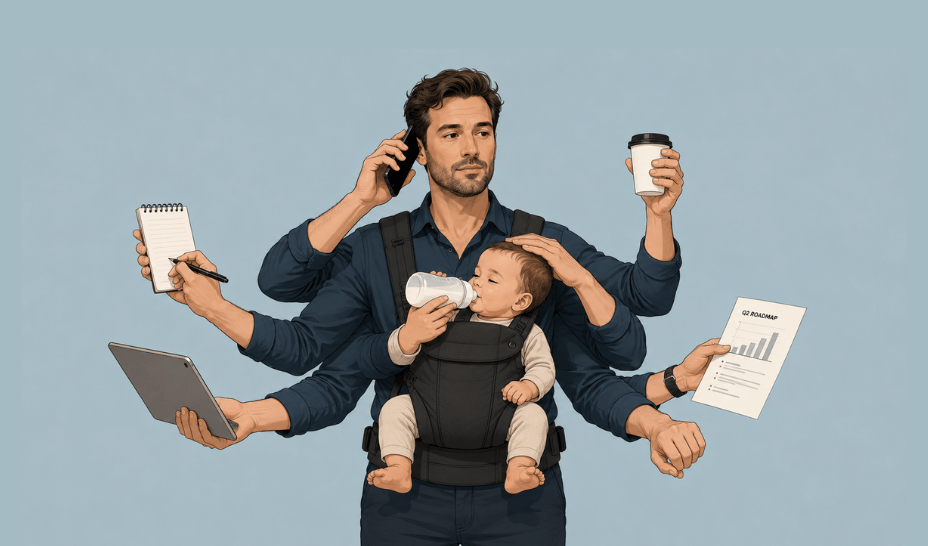
Startup culture loves a sacrifice story. Sleepless nights, missed holidays, laptops open at dinner, founders running on caffeine and conviction.
But a new international survey suggests one of the biggest costs of entrepreneurship may be far more personal: many founders are delaying, limiting, or questioning family life because of the pressure to build a company.
According to the survey, more than half of founders without children have delayed having them due to entrepreneurial pressures. Nearly one in four said they feel they must choose between entrepreneurship and family life.
Among founders who are already parents, almost one in five said they delayed having children, while more than 14% said they limited the number of children they planned to have because of the demands of building a startup.
A private problem goes public
The findings offer a rare look at a topic that is often managed behind the scenes, but rarely treated as a serious ecosystem issue.
Startups are built around speed, risk, urgency, and constant availability. Parenthood, by contrast, requires time, stability, flexibility, and care. The survey suggests that for many founders, this choice decides who gets to build companies, when they build them, and at what personal cost.
The qualitative survey was conducted in September and October 2025 by Maria 01, a Helsinki-based startup community, in collaboration with strategic communications agency Bamla.
The survey gathered 55 anonymous responses from startup founders, CEOs, operators, and aspiring founders across 9 countries. Respondents were 53% women and 46% men; 62% were founders and 20% were aspiring founders; 69% had children and 31% did not. A majority were at pre-Seed or Seed stage.
Always on, never enough
While small in scale, the results are striking because they touch on an experience many entrepreneurs recognise, but few openly discuss. Founders are often expected to show total commitment, especially in the early stages of building a company.
The more competitive the funding environment, the stronger that expectation can become. The problem is that “commitment” is still too often measured through visible busyness: long hours, late replies, constant travel, and being endlessly available to investors, teams, customers, and the market.
For parent founders, that creates an impossible equation. Half of founders with children said they feel stressed always or almost always when trying to balance startup life and family. For those without children, two thirds said entrepreneurship has influenced how they think about starting a family.
“Across Europe, birth rates are at historic lows just as we urgently need more founders to drive the next wave of growth. We cannot afford to choose between the two. If we want more founders, more innovation, and healthier demographics, the structures around work, care, and entrepreneurship must change. Founders’ struggles with parenthood are not personal failings, but they do reflect deeper cultural norms and rigid systems that the entire ecosystem needs to rethink,” says Sarita Runeberg, CEO of Maria 01.
The pregnancy penalty
The survey also highlights how unevenly the pressure is experienced. Female founders reported hiding pregnancies from investors and avoiding startup events whilst visibly expecting. Some described feeling judged or seen as investment risks for wanting children.
For male founders, taking parental leave is still not widely normalised in the startup ecosystem. Across the board, respondents said they wanted a culture where parenthood is visible, accepted, and not treated as a signal of reduced ambition.
If women feel they must conceal pregnancy to protect funding prospects, the ecosystem loses talent. If men feel unable to take leave, caregiving remains unevenly distributed. If founders of any gender believe family life will make them seem less investable, the result is a narrower, harsher, and less sustainable startup world.
“When I founded Yummy, I thought the toughest part would be building the business. In reality, the hardest part was what it did to my family life. Ironically, becoming a parent has made me a better entrepreneur, more focused, excellent at prioritising. But the ecosystem doesn’t necessarily make it easy to be both,” says Juhana Rintala, founder and CEO of Yummy.
Parents make sharp founders
One of the more interesting findings is that founders do not necessarily see parenthood as a weakness. Many respondents said becoming a parent had improved their performance as entrepreneurs. They cited sharper focus, better prioritisation, and less tolerance for performative busywork.
In other words, the skills that parenthood can strengthen are exactly the skills startup leaders need: discipline, decision-making, perspective, and the ability to spend time where it actually matters.
The challenge, then, is not whether parents can be strong founders. The challenge is whether startup culture is mature enough to value outcomes over exhaustion. Founders in the survey called for greater flexibility in time, location, and pace, and for an environment less driven by long hours and burnout.
Immediate teams were often described as supportive, but the wider ecosystem was seen as neutral at best, and often hostile, towards parenthood.
Flexibility, in theory
The findings also complicate the popular image of entrepreneurship as flexible by default.
In theory, building a company can offer more control over time and work. In practice, early-stage founders are often under intense pressure from fundraising cycles, hiring needs, product development, customer demands, and investor expectations.
“My life consists of three things right now: family, work, and sports. There’s no room for anything else, really. I wouldn’t have it any other way either, I’m incredibly happy to be a parent and proud of what we’re building at Measurlabs. I think we should be honest about what entrepreneurship actually costs. The startup world talks constantly about building sustainable companies, but rarely about whether the people building them are ok with the cost,” says Teemu Myllymäki, CEO and co-founder of Measurlabs.
A startup culture reset
The findings suggest that if the continent wants more founders, more innovation, and more resilient companies, it cannot keep treating family life as something founders must solve alone.
Startups often talk about sustainability in terms of business models, revenue, unit economics, and climate impact. The findings asks whether the people building those companies are sustainable too.
And for a culture that prides itself on solving hard problems, that may be one of the most urgent questions on the table.