



Trains buckle, schools shut and outdoor workers struggle through 40°C days. Trade unions and scientists are warning that Europe’s heatwave is no longer just a ‘weather story’ but a full showdown over who is responsible for keeping workers safe.
 Petra Pavlovičová



The heatwave sweeping Europe this week is raising questions about whether existing workplace protections are fit for a warming climate – prompting trade unions and health experts to call for binding EU rules to protect workers from extreme temperatures.
Large parts of Europe have recorded unusually high temperatures in the first days of summer, with heat alerts issued across several member states.
Scientists have repeatedly warned that climate change is increasing both the frequency and intensity of heatwaves, making extreme heat a growing occupational risk.
According to trade unions, climate change has become an occupational safety and health (OSH) concern, as well as a broader labour issue affecting workers across Europe.
“All three stakeholders: the governments, the employers and the workers agreed that the heat is an issue that needs to be addressed,” Andreas D. Flouris, professor of physiology at the University of Thessaly and coauthor of the report, told EUobserver on Thursday (25 June).
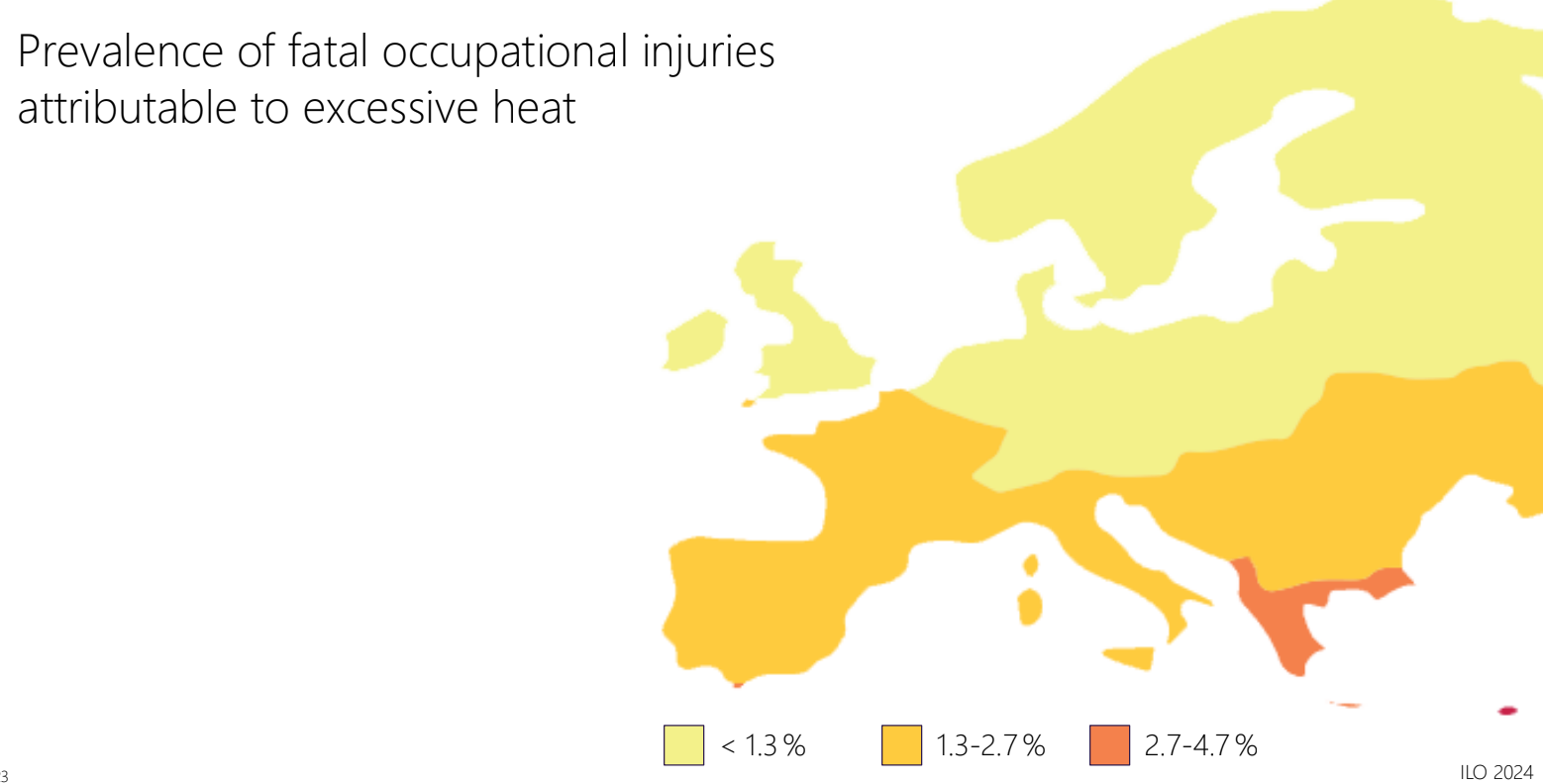
Since 2000, there has been an increase of 42 percent in heat-related workplace fatalities in the EU.

And the World Heath Organisation (WHO) issued a statement pointing that across the EU and associated countries, in the last four years only, the heat has claimed more than 200,000 lives. “Most of these deaths were entirely preventable,” it simply states.
In a report to be published in the next few days by the European Trade Union Institute (ETUI), experts argue that heat exposure should be treated as a workplace risk requiring specific preventive measures rather than emergency responses after incidents occur.
“We want to protect workers in their daily lives,” Marouane Laabbas-el-Guennouni, researcher at ETUI and coauthor of the report, told EUobserver.
Several measures could be considered. Trade unions generally prefer new EU rules that would guide national legislation, as this would create obligations at the European level while respecting the fact that labour policy remains primarily a national competence.
“We wanted to translate scientific evidence into practicality,” said Laabbas-el-Guennouni, arguing that prevention can ensure the continuity of work.
Under existing EU legislation, employers already have obligations to assess workplace risks – but unions argue that it falls short on addressing extreme temperatures.
Unlike physical hazards with clear legal limits (like noise decibels or chemical exposure parts-per-million), there is no EU-wide maximum legal working temperature.
“Our role as a trade union federation is to make clear that there are problems, emergencies that have to be tackled, and that this is one of them,” Ivan Ivanos of the European Federation of Trade Unions in the Food, Agriculture (EFFAT) political secretary told EUobserver.