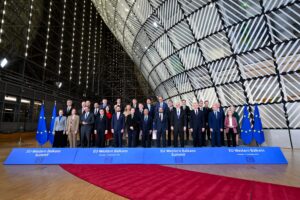
The enlargement craze has sent legislative mechanisms ablaze in many Balkan and Eastern European countries, with transparency and corruption issues still behind Brussels standards.
 Gaia Neiman



Experts say countries seeking EU membership are rushing to pass EU-aligned laws while sidestepping rule-of-law standards, or failing to make enough progress on transparency and anti-corruption efforts.
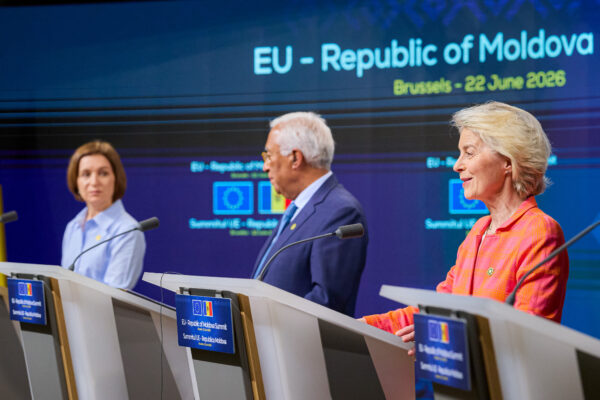
Leaders from the Western Balkans and Eastern Europe hoping to join the EU have had a historic month, witnessing the opening of Ukrainian and Moldovan accession negotiations after two years of blockade due to former Hungarian prime minister Viktor Orbán’s veto.
But NGOs have now warned of a slowdown in their transparency efforts.
For Ukraine, experts argue that Kyiv had used Hungary’s veto threat as a shield, delaying some of the work needed to strengthen transparency and anti-corruption safeguards. “Progress on anti-corruption reforms has been uneven and quite limited,” said Oleksandra Misiura of watchdog group Transparency International Ukraine at an event in Brussels on Wednesday (24 June).
While Kyiv has introduced a new public procurement law aimed at aligning its system with EU standards, Misiura said legislative progress had stalled. “We’ve had a halt in legislative initiatives being adopted by parliament, and the only impetus we could get for MPs to vote on certain laws was when they were linked to European integration,” she told EUobserver.
However, the EU-harmonisation craze has meant that bills that incorporate EU directives often bypass mandatory consultation procedures, increasingly excluding civil society from decision-making, with many NGOs disappearing in Georgia.
Last year, the Tbilisi City Court approved a request from the Prosecutor’s Office to freeze the bank accounts of seven leading Georgian civil society organisations, in a move widely seen as politically motivated.
Governments in Albania, Bosnia and Herzegovina, Kosovo and Montenegro are expediting lawmaking through the excuse of EU integration, despite enlargement commissioner Marta Kos often emphasising that rule of law must be “at the centre” of accession reforms.
The rushed transposition of EU laws is especially felt in Albania, a country in advanced stages of accession negotiations. “The government [is] arguing that when a law is required by the EU, there’s not much space to consult or negotiate anything in it,” Daniel Prroni from independent fact-checking organisation Faktoje told EUobserver on Wednesday.
The Balkan country continues to struggle with high rates of financial crime, ranking 91st out of 182 countries globally on Transparency International’s Corruption Perceptions Index., sitting far below the European regional average.
“We have a huge problem with money laundering comparing to other countries in the region,” said Redi Ametllari from the Institute for Democracy and Mediation.
This challenge is not unique to Albania, however; neighboring nations like Bosnia and Herzegovina (ranked 109th), as well as Ukraine (ranked 104th), face similarly severe institutional vulnerabilities.
“Enlargement cannot be treated as a box-ticking exercise, and should not reward formal compliance alone,” Carolina Gil, Policy Associate at Transparency International told EUobserver.