

Britain’s enormous debt pile means the bond market now has the power to decide the fate of a government. Ali Lyon spoke to gilt investors to see how our new Chancellor can keep them happy. When John Healey was last in the Treasury, the world was a very different place.
 Ali Lyon



Friday 24 July 2026 5:00 am | Updated: Thursday 23 July 2026 9:05 pm
Britain’s enormous debt pile means the bond market now has the power to decide the fate of a government. Ali Lyon spoke to gilt investors to see how our new Chancellor can keep them happy.
When John Healey was last in the Treasury, the world was a very different place. Britain’s economy was growing at a canter. The country was an integral part of the European Union, giving serious consideration to joining its fledgling currency. And government debt – that running sore of today’s developed economies – stood at a trifling 30 per cent of gross domestic product.
A shade under two decades later, and life in the department responsible for safeguarding – and growing – the UK’s economy is altogether more challenging. Pandemic recovery aside, growth has failed to hit two per cent in any year since 2018. The UK has extricated itself from Europe, with all the potential upsides and pitfalls that decision brings. And the cash we – as a country – owe to the world’s dispassionate bond investors has more than tripled to stand at over 95 per cent of our entire annual economic output.
Of those shifts, it is the latter that threatens to define Healey’s spell at the helm of our most powerful government department. The taxpayer now spends more than £110bn a year paying interest on debt that the country has racked up from running a budget deficit – where the state spends more than it receives through taxes – every year this century. Were it a government department, it would be the third largest; smaller than health and welfare, but bigger than education and, by some margin, defence.
The upshot of which is that swings in the price that investors require for holding our debt – swings which 20 years ago would have been a rounding error in the overall public purse – are now highly consequential. And the confidence that spectral bond market constituents have in our economic vision has taken on a historic importance.
#mc_embed_signup { background: #fff; clear: left; font: 14px Helvetica, Arial,sans-serif; width: 100%; max-width: 600px; margin: 20px 0; } #mc-embedded-subscribe-form { margin: 20px 0 !important; } .newsletter-form-flex { display: flex; gap: 0; align-items: center; margin-top: -10px; } .newsletter-form-flex input[type=”email”] { flex: 1; padding: 2px 10px; border: 1px solid rgb(18, 22, 23) !important; border-radius: 12px 0 0 12px !important; } .newsletter-form-flex input[type=”submit”] { padding: 4px 10px !important; margin: 0 !important; background-color: rgb(18, 22, 23) !important; color: rgb(255, 255, 255) !important; border: 1px solid rgb(18, 22, 23) !important; border-radius: 0 12px 12px 0 !important; } .newsletter-banner-content { margin-bottom: 15px; } .newsletter-banner-content h2 { margin: 0 0 10px 0; font-size: 18px; font-weight: 600; } .newsletter-banner-content p { margin: 0 0 10px 0; line-height: 1.5; } .newsletter-banner-content ul, .newsletter-banner-content ol { margin: 0 0 10px 20px; } .newsletter-banner-content a { color: #0073aa; text-decoration: none; } .newsletter-banner-content a:hover { text-decoration: underline; } .newsletter-banner-content img { max-width: 100%; height: auto; margin: 10px 0; } #mc_embed_signup #mce-success-response { color: #0356a5; display: none; margin: 0 0 10px; width: 100%; } #mc_embed_signup div#mce-responses { float: left; top: -1.4em; padding: 0; overflow: hidden; width: 100%; margin: 0; clear: both; }
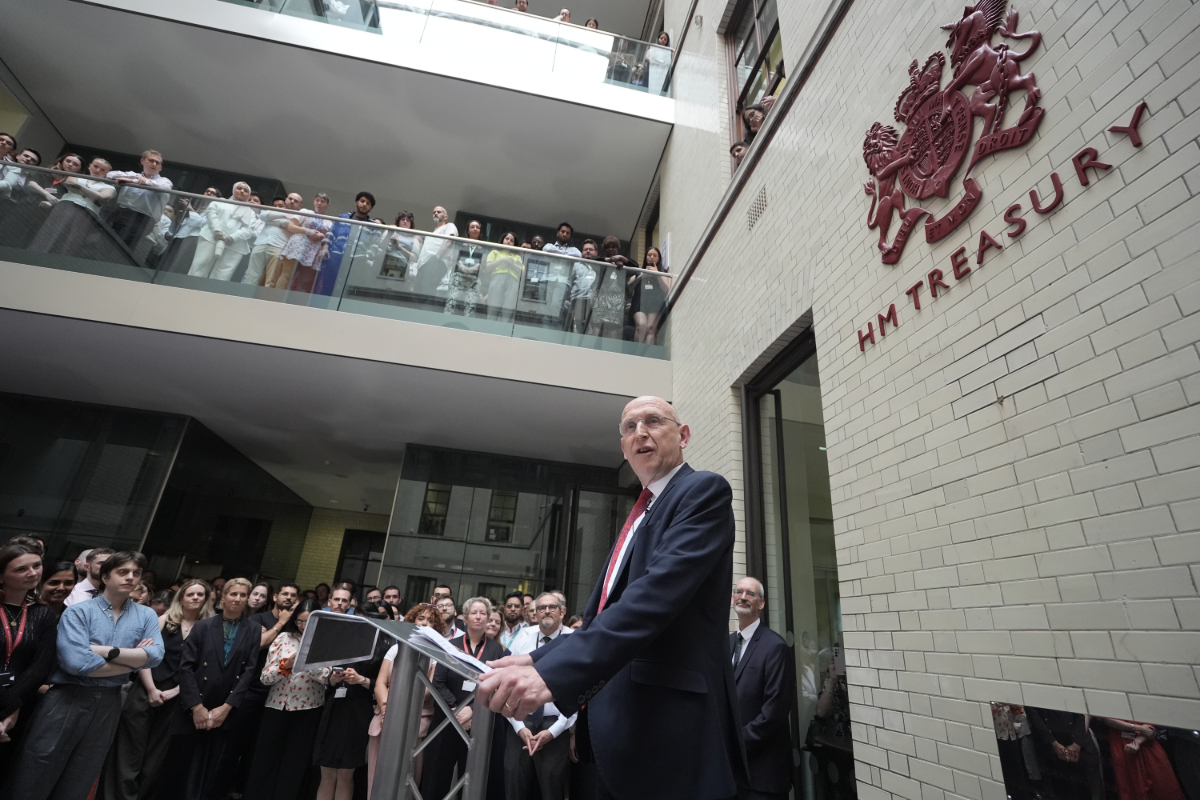
It is a fact of which Healey, the former defence secretary who spent five years in junior Treasury roles while Gordon Brown was in No 11, appears cognisant. Soon after taking Westminster off guard with his elevation to Chancellor, the Labour veteran went out of his way to reassure the country’s restive gilt traders.
He and the Prime Minister, he told reporters, would “work in lockstep to meet the fiscal rules” – referring to the self-imposed spending straitjacket he inherited from his predecessor and to which he has since recommitted. Alongside Burnham, he would also retain a “buffer against uncertainty”, he added – widely interpreted to mean keeping, or even expanding, the amount of breathing space between their spending plans and being in breech of those rules. And – as so many in his role have done before him – he espoused his commitment to fiscal credibility: “the bedrock for economic and for national security”.
Th bond market’s golden rule: stick to the fiscal rules
But talk, in the cold-headed world of fixed income, is cheap. And so warm words aside, how might our new Chancellor best navigate this brave new world – one which he has watched come to define our economy from stints in the shadow cabinet and as defence secretary, but which he must now learn to manage himself?
“Bond investors reward governments that are boring, predictable and fiscally disciplined,” James Carter, co-head of fixed income at W1M, told City AM. “Stick to the rules, avoid surprises and don’t announce spending commitments without explaining how they’ll be paid for.”
“One thing the bond market really does not like is surprise,” added Oliver Faizallah, head of fixed income research at Raymond James. “What Healey could do that would be of negative consequence to the bond market would be to announce any big spending without clarity on how it’s going to be funded.”
Read more Milestone Alphabet century bond already under pressure
While the markets have so far taken Healey’s surprise appointment in their stride, announcements and rumours from his first few days in office have done little to calm any lingering nerves. Burnham – in his first remarks as Prime Minister – promised to end rough sleeping at a cost of roughly £350m and remove VAT from energy bills for £1.7bn. They may be drops in the ocean in the grand scheme of public spending, but they are – in the eyes of our fiscal watchdog – unfunded drops nevertheless. Since then, he has promised to freeze bus fares, deciding – somewhat nebulously – to take money from the existing energy department’s budget to pay for it.
And then there are the rumours of larger aspirations: unfreezing the personal allowance (£4bn), restoring the international aid budget (£11bn), nationalising Thames Water (£4bn) and upping defence spending to three per cent of GDP (£14bn).
Early Budget ‘would bring certainty’
Realising all – or even some – of those commitments without triggering an almighty bond market reaction will be a tall order. So tall that some – including Panmure Liberum chief economist Simon French – struggle to envisage a world in which they will actually happen. But they are not, says Carter, by definition guaranteed. “Investors can live with difficult policy choices,” he told City AM. “But they struggle with sudden U-turns, unfunded promises and uncertainty over the fiscal framework.”
One way to fix that uncertainty would be an early Budget. The move would entail plenty of downsides, not least the practical implications of orchestrating a Treasury machine Healey barely knows to prepare a fiscal package that he hasn’t worked out yet. But for the country’s gilt investors, the clarity a Budget would provide – and the thorough sense-check it would get from the Office for Budget Responsibility – would be an immense source of comfort. Politically, it would also keep to a minimum the amount of speculation over who the Chancellor will target in a bid to plug a fiscal hole that City AM puts at a minimum of £22bn.
“The longer uncertainty persists around fiscal policy, the more cautious markets are likely to become,” said David Zahn, Franklin Templeton’s head of European fixed income. “Investors have already experienced an extended period of uncertainty over tax and spending plans, so providing clarity sooner rather than later would help reduce that uncertainty and allow markets to assess the government’s priorities on their merits.”
Whether it happens sooner or later won’t change the fact Healey finds himself on a tax and spend tightrope – a fiscal trilemma, in the words of RSM UK economist Thomas Pugh. He needs to offer enough red meat to keep rebellious backbenchers happy, while avoiding raising taxes to such a degree that he kills off growth or goes beyond the Laffer curve’s apex. And he needs to do all that while doubling down on the fiscal rules’ all-important pledge for debt to be falling come the end of the parliament.
To Daniel Mahoney, senior economist at Handelsbanken, there is one cost-effective way Healey could satisfy, come his first Budget: oversee the kind of supply-side shake-up that his predecessor had a go at, but couldn’t follow through on. “More ambitious reforms on planning and creating an AI-regulatory environment that boosts UK competitiveness – markets would love that,” he told City AM.
Successfully negotiate that first big test, and Healey could suddenly find himself with some much-needed breathing space. “Even modest declines in gilt yields can translate into billions of pounds of lower debt interest costs over time,” said W1M’s Carter.
Get it wrong, though, and our Chancellor needs only to brush up on his 1970s economic history to know what might happen. The 1976 debt-related crisis saw a run on the pound so severe – and bond yields get so high – that Britain had to go cap in hand to the IMF for a £3bn bailout.
The man in charge of the Treasury at the time? A Labour veteran – and former defence secretary. One who just so happened also to go by the name of Healey.
Read more Borrowing costs jump after Burnham ‘fiscal flexibility’ remarks
Similarly tagged content: Sections Categories People & Organisations