

Reporting from some of the poorest seaside towns revealed how young people have been left isolated – but remain resilient and full of hopeIf you were asked to summon up images of the coastline of England and Wales, you might think of sunny days, buckets, spades and carefree holidays. But
 Lisa Bachelor and Polly Braden




If you were asked to summon up images of the coastline of England and Wales, you might think of sunny days, buckets, spades and carefree holidays. But for many young people growing up by the sea, decades of evidence tell a very different story. For them, rather than a picture-perfect horizon full of hope, the sea has become a boundary that swallows up opportunity.
With a 73% decline in funding for youth services in England over the past 12 years, and a lack of opportunities that has led to nearly 1 million 16- to 24-year-oldsnot in work, education or training (Neet), the situation for young people, especially in places of deprivation, has never seemed more desperate.
On our journey around the coast we saw this first-hand – young people who had become isolated and despondent. For decades, they have taken the blame, with countless media articles describing them as “lazy” or “feral”, and their towns as “scum”.
We wanted to shine a light on the positive things that are being created by and for young people on the coast, to highlight just what it is we cannot afford to lose. We also wanted to hold accountable all the adults who have made, or allowed, the policies that stripped back the services that supported young people.
Here are some of the key things we learned along the way.
Young people feel excluded from the conversation
Eleanor, 23, Morecambe, Lancashire: “I think if people just chatted to the young people here and welcomed them to more decision-making events, it would make this a much better place.”

A failure to tackle England’s “coastal problem” has plagued governments for decades. Data released last year found that nine out of 10 of the most deprived neighbourhoods in England were coastal (seven were in Blackpool, Lancashire, one in Hastings, Sussex, and one in Tendring, Essex). The most deprived small area in Wales was in Rhyl, with other coastal towns making up some of the most deprived in the country.
Yet everywhere we went there was the sense that coastal communities were not being taken seriously.
Ben Cooper, who wrote a report for the Fabian Society four years ago urging Labour to focus on the coast, echoes that sentiment. He warns that MPs need to “show that they want them [coastal communities] and everyone in those places to succeed. There is a feeling of disconnect in many of these places. It is not enough to just have good policy.”
With that in mind, we connected young people from coastal places via workshops where they created their own images of their towns. These were then made into postcards that they sent to one another setting up an exchange along the coast. Some of these are being shown as part of a wider, touring Against the Tide exhibition, now on at Bristol’s Arnolfini gallery, while others will be displayed at Blackpool North train station for the next 10 years.
We also took 16 young people from eight coastal places in England to parliament to give evidence about their lives to MPs in the all-party parliamentary group (APPG) for coastal communities.
Polly Billington, the Labour MP for East Thanet and chair of the newly reformed coastal parliamentary Labour party (PLP), chaired the session. “I think that one of the most radical things we can do at the moment, because of the levels of isolation that people are experiencing, is to bring them together,” she says. “This was a brilliant way of giving young people the opportunity to understand what they’ve got in common.”
Eighteen-year-old Francesca, from Blackpool, wants those in power to do more than just listen, however. “Having debates and public speaking is good for young people, so we should keep doing events. But we can also do events where [those in charge] take on board our plans. We do actually have plans, you know!”
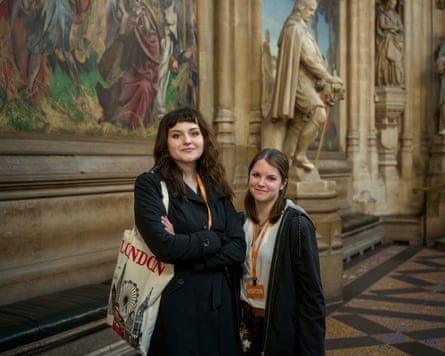
Since the APPG, the Coastal Navigators Network (CNN), which helped put the event together, has taken forward one of the ideas suggested by 26-year-old Courtney from Felixstowe. It has committed to establishing a Young People on the Coast Action Network to try to involve younger people more closely in creating opportunities.
Coastal places face unique challenges
Annalise, 18, Whitehaven, Cumbria: “I sent out a form to the other young people in my town and one thing I asked was: ‘Do you think you have the same opportunities as other young people elsewhere?’ The answers were all ‘no’.”
Employment was a consistent theme along the coast, where opportunities for young people are often halved, largely due to the presence of the sea in one direction.
Many of those we spoke to would like better, earlier information about ways into work, including fairly basic things such as communicating information through channels they use, like social media. In particular, many mentioned the need for help with work experience. The evidence suggests this is very hard to find outside well-connected families and especially for those with a limited number of employers to turn to.
The government has committed to helping young adults who have not been in work or education long term to get work experience, though the first phase does not appear to cover coastal areas in England.
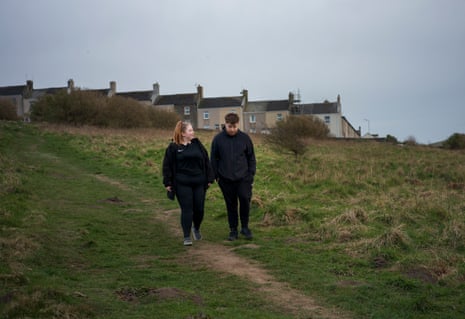
Where there are job or educational opportunities, young people need to be able to reach them. “There should be more means testing to allow those from poorer families to keep hold of a bus pass, not just up until when you’re 18 and in college, but after that, so that you can get a job elsewhere and do other things,” says 23-year-old Archie from Weston-super-Mare in Somerset.
Since the start of the Against the tide series a year ago, there has already been a welcome government policy impetus aimed at young people, including the first national youth strategy in 15 years.
One of the initiatives with the most potential for change is the rollout of young futures hubs, designed to give young people support on things such as employment and health and wellbeing (comparable to Sure Start but for teenagers and young adults). At the moment, it is unclear how many of these will be on the coast (the initial roll out only includes Brighton and Hove) and, slightly confusingly, these will sit alongside existing youth hubs from the Department for Work and Pensions.

Avril Keating, professor of youth studies at University College London’s Institute of Education, whose research helped inform the Guardian’s work, sums up the problem. “There are so many people and different government departments responsible for delivering objectives for the coast. The question now is: who is joining that up to make sure there is a strategy in place?”
That is something Billington, the East Thanet MP, has talked about a lot over the past year. She is pushing not only for a coastal communities minister at cabinet level, to make sure the coast is central to any conversation about change, but she also wants the government to agree to establish the coast as a “special economic zone”. The area within 5km of the shore, she says, should have its own economic rules that would help support growth sectors.
“We need to start talking about what our opportunities and potential are,” she says. “We shouldn’t be seen as places that are too difficult to develop and grow.”
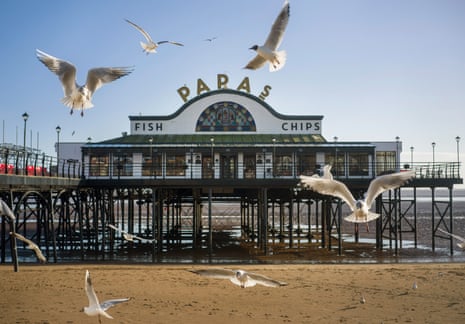
A big problem is poor health outcomes – and these start early
Tom, 16, Ramsgate, Kent: “I do think things like a lack of transport and not having enough social spaces for people to interact with other young people does take a toll on your mental health.”
We started our series with a story that revealed the poor state of mental health of young people in coastal places as compared with their peers in equivalent places of deprivation inland.
It was a stark reminder of the wider health crisis on the coast, so well documented by the then chief medical officer, Chris Whitty, in a seminal report in 2021, and how that has affected a largely undocumented group on the coast: the young.
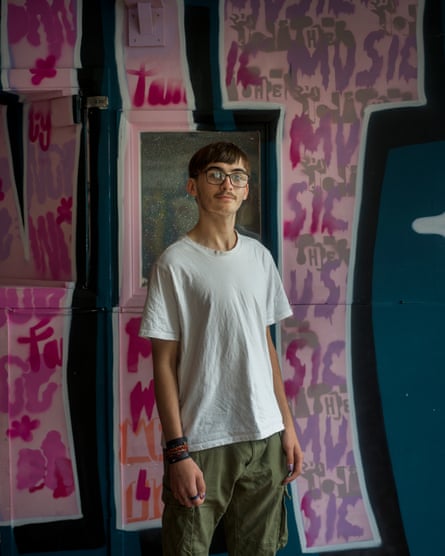
Lord Kamlesh Patel of Bradford chairs the CNN, set up after Whitty’s report to develop practical responses to coastal challenges with relatively modest funding and a focus on locally led solutions. It is working in 19 of the most deprived places.
One of these is Fleetwood, a disadvantaged coastal town in Lancashire, where the group has redesigned children and young people’s mental health support around early intervention and seen a 54% reduction in referrals to child and adolescent mental health services (CAMHS) and a similar reduction in children attending A&E.
“We don’t need more research or more evidence on this [the coastal problem],” he says. “We just need practical projects led by local people created within a system that listens to them and links them together.”
Patel is frustrated that the government is not learning from successes such as these by putting in place the funding and structure that would enable them to be replicated more easily elsewhere.
“There’s a massive advantage in planning for healthy ageing early,” he says. “Those 16- to 24-year-olds now will become the more expensive, complex cases of unhealthy ageing later if we don’t act. You concentrate on the coast and go in there first because it’s most acute there. But there are priority locations across the country and the ambition should be to roll out this approach across all of those.”
There is also huge potential for the new youth hubs to help break the cycle between being not in education, employment or training (Neet) and having poor mental health. As the authors of a new report for the Centre for Young Lives point out, however, the hubs are set up to deliver “wellbeing support”, which is distinctly different from mental health provision.
“If provision is limited to signposting, this may simply transfer additional pressure on to already overstretched children and young people’s mental health services, particularly for young people with more complex needs – rather than providing the support needed,” they say.
There is a lack of things to do
Orson, 18, Blackpool, Lancashire: “It can be quite hard here because the town is more of a tourist attraction so there’s not a lot,” he says. “But I feel like when I am inspired through dance it lights a spark in me. It’s like an escapism from the realities of other things in life.”
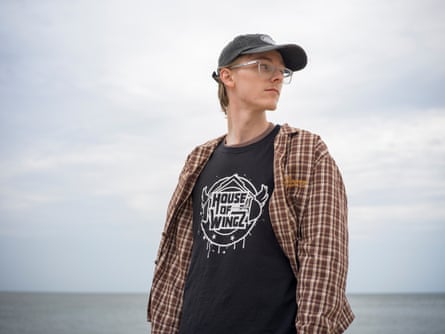
Orson attends the dance and arts company House of Wingz. Such is their success that last year, three of the 30 dancers selected nationwide for the National Youth Dance Company (NYDC) were from House of Wingz and a further two have got through this year.
When we first met Orson, House of Wingz was facing an uncertain future with no guarantee of funding to keep it going. Thankfully that changed at the end of January when it was given a lottery grant, allowing it to stay open for another five years.
Aishley Bell-Docherty, the creative director and co-founder of the company, describes the “massive relief” at having that certainty until 2031. “We’ve always done what we’ve done in spite of lack of money,” she says. “The NYDC programme that Orson is in … three of them got into that national programme in spite of what we don’t have in [this town]. We’ve all got massive aspirations for Blackpool.”
A significant part of the government’s youth strategy is an investment into 250 youth clubs, which it announced during the time we were reporting for Against the tide. But the fact that time is running out was underlined when we came across Pie Factory Music, the last remaining youth centre in Thanet, one of the most deprived coastal areas in England, which was fighting Kent county council to remain open.
This fear over funding was a common story around the coast among youth groups, many of them based around music, dance and theatre.
Emily Murray, director of Essex University’s centre for coastal communities, provided the research about young people’s mental health that started our series. “Something that comes up time and time again is that youth groups are constantly getting small time-limited funding pots to do projects that make a difference,” she says. “And then the money’s gone.
“What they need is long-term guaranteed funding. Just imagine what they could get done if they didn’t have to spend all this time and energy applying for money over and over again.”
The danger of not investing in health, jobs, education, transport and youth spaces on the coast is that it forces young people to leave. Even if some return when they are older, that is not an outcome that many we met wanted.
“What happens to a place is that it misses out on the energy and potential of those people,” says Keating. “We should be focused on wanting to keep people when they are young.”
Additional reporting by Antonia Shipley