
Andy Burnham has harboured ambitions to be Prime Minister for over a decade. But the economy he is inheriting will take the shine off his lofty hopes – just look at these four charts. As he stepped out onto Downing Street for the first time as Prime Minster, Andy Burnham
 Ali Lyon



Tuesday 21 July 2026 6:31 am | Updated: Tuesday 21 July 2026 6:32 am
 Divine intervention? Andy Burnham has an unenviable economic inheritance
 Andy Burnham has harboured ambitions to be Prime Minister for over a decade. But the economy he is inheriting will take the shine off his lofty hopes – just look at these four charts.
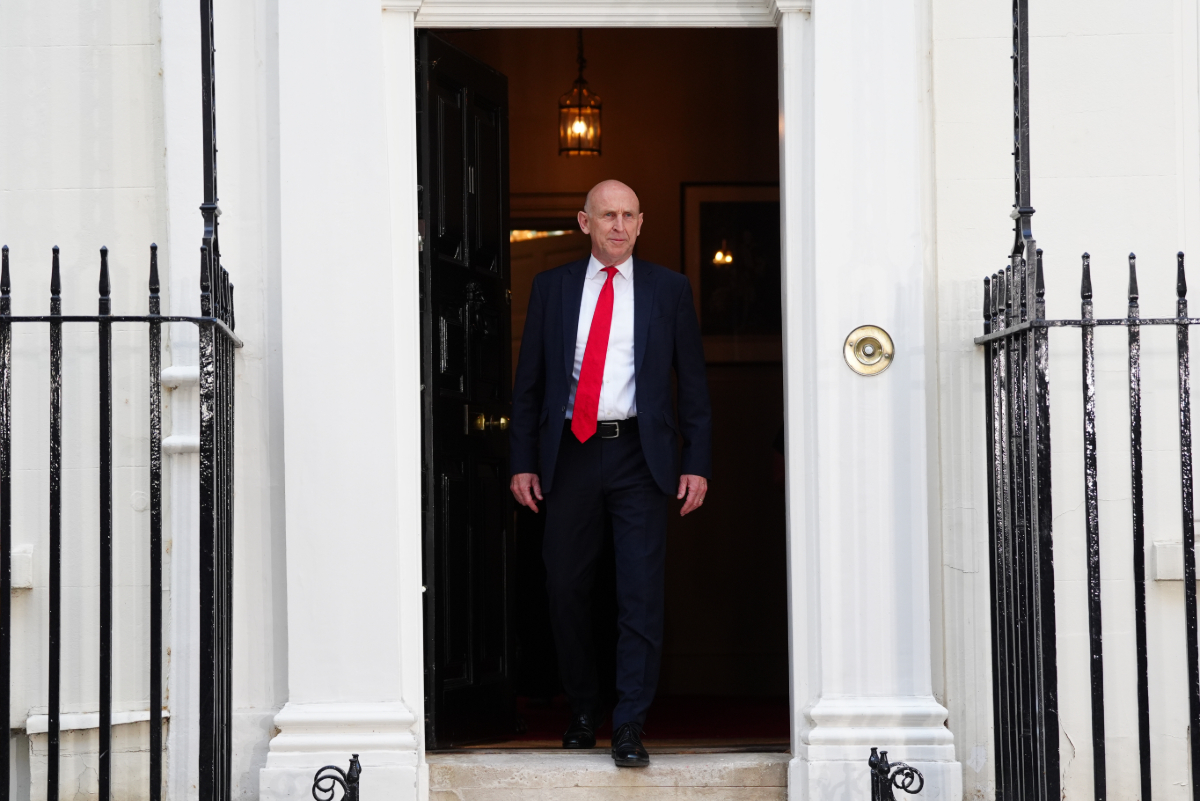
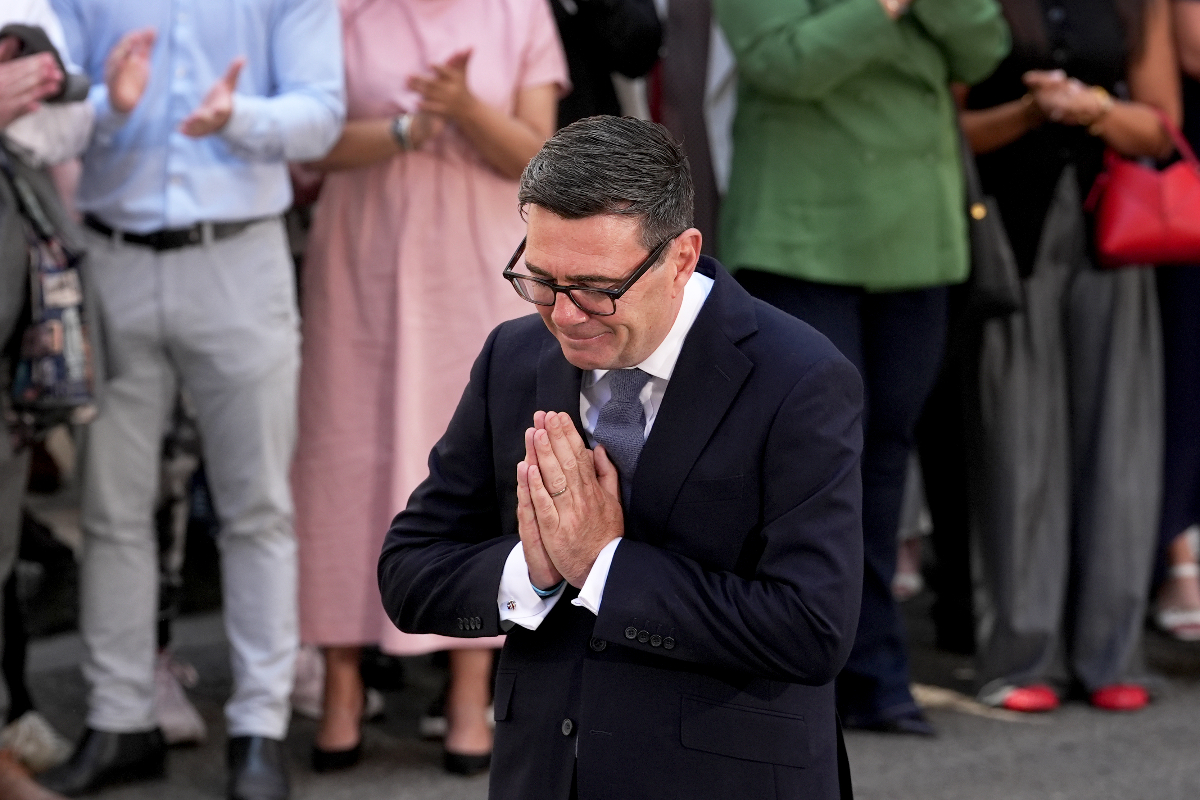
As he stepped out onto Downing Street for the first time as Prime Minster, Andy Burnham allowed himself to break out into an unapologetic smile.
Having made no secrets of his longstanding desire to lead the Labour party, the three-time leadership hopeful had – finally – triumphed in his decades-long campaign.
But as Burnham acknowledged in the detail-lite and lectern-free speech that followed, for all the personal pride the achievement warranted, the act of governing will be sobering and challenging.
Speaking for just five minutes, Britain’s new Prime Minister promised to build a “new economy“, starting with the offer of “breathing space” for British households. Announcements on the cost of living that could come as soon as Tuesday. After which, having moved in to his new office, a more thorough – and long-term – blueprint would follow in the Autumn.
#mc_embed_signup { background: #fff; clear: left; font: 14px Helvetica, Arial,sans-serif; width: 100%; max-width: 600px; margin: 20px 0; } #mc-embedded-subscribe-form { margin: 20px 0 !important; } .newsletter-form-flex { display: flex; gap: 0; align-items: center; margin-top: -10px; } .newsletter-form-flex input[type=”email”] { flex: 1; padding: 2px 10px; border: 1px solid rgb(18, 22, 23) !important; border-radius: 12px 0 0 12px !important; } .newsletter-form-flex input[type=”submit”] { padding: 4px 10px !important; margin: 0 !important; background-color: rgb(18, 22, 23) !important; color: rgb(255, 255, 255) !important; border: 1px solid rgb(18, 22, 23) !important; border-radius: 0 12px 12px 0 !important; } .newsletter-banner-content { margin-bottom: 15px; } .newsletter-banner-content h2 { margin: 0 0 10px 0; font-size: 18px; font-weight: 600; } .newsletter-banner-content p { margin: 0 0 10px 0; line-height: 1.5; } .newsletter-banner-content ul, .newsletter-banner-content ol { margin: 0 0 10px 20px; } .newsletter-banner-content a { color: #0073aa; text-decoration: none; } .newsletter-banner-content a:hover { text-decoration: underline; } .newsletter-banner-content img { max-width: 100%; height: auto; margin: 10px 0; } #mc_embed_signup #mce-success-response { color: #0356a5; display: none; margin: 0 0 10px; width: 100%; } #mc_embed_signup div#mce-responses { float: left; top: -1.4em; padding: 0; overflow: hidden; width: 100%; margin: 0; clear: both; }
Bills, he intoned, remain too high. Access to high quality, affordable housing too scant. And large parts of the country feel as if they are “in decline” thanks to myopic decision-making from successive governments.
The remarks stood in stark contrast to those from his predecessors, who spent much of their final days in office launching panglossian defences of their respective tenures. Last week Rachel Reeves said she had “restored economic stability” and put “our public finances on a secure path” during her time in No 11. And in his final speech as Prime Minister on Monday, Starmer maintained “the economy is stronger” than when he found it. “My work is done,” he said, having been forced out.
Of the strikingly different assessments, it is Burnham’s that is most accurate. Years of stuttering growth, a political aversion to tackling bloated government spending and a tax burden that has sailed past post-war highs have left the country in a bind: one which will not become any less pressing for having a new occupant in Downing Street.
“Burnham will face the same fiscal trilemma as Reeves and Starmer did two years ago,” Thomas Pugh, chief economist at RSM UK, told City AM. “Namely how to satisfy surging demands for spending, without breaching manifesto commitments on tax and keeping within the fiscal rules.”
Burnham’s borrowing cost conundrum
One of the key threads that defined Starmer’s economic track record, was the unshakeable premium that bond investors forced the UK government to pay on its debts. Across both long- and short-term borrowing, Britain’s interest rates have been the highest in the G7 since before the 2024 general election.
The effect of this has been to hem in the Treasury, where ministers found themselves with an ever shrinking pot of cash with every upward bond yield that characterised Starmer’s premiership. Britain, infamously, now pays more than £100bn a year on its debt interest, roughly the same as the entire education budget and double the most recent settlement for the armed forces.
To rectify this, XTB markets’ Kathleen Brooks argues, Burnham and his new Chancellor John Healey, must keep an ironclad grip on public spending and avoid any moves that might stoke price rises.
“Drawing a line under inflation busting public sector pay rises, and welfare spend restraint will be the fastest way for Burnham to ease upward pressure on bond yields in the first months of his premiership,” she said.
Read more As it happened: John Healey named Chancellor as Burnham shakes-up cabinet
Bring down those borrowing costs, and immediately Burnham will free up several billion pounds for fresh spending pledges or, better still from an economic standpoint, tax cuts. Only so much of that will be in his gift, and his gift alone…
Inflation sticky, Bank rate staying put
As recently as February, City economists were toasting the imminent arrival of an all-important ‘soft landing‘ in monetary policy. That is to say, Bank of England rate-setters looked as if they had successfully squeezed out years of inflation and avoided a recession in so doing. But then, on 28 February, Donald Trump launched the first of the now-all-too-familliar rounds of air strikes on Iran, and much of that hard work went up in smoke.
Interest rate expectations, be they from those implied by the UK’s short-term borrowing costs or households’ surveyed inflation expectations, skyrocketed. And the Bank’s central interest rate, which at the new year analysts had at the start of the year expected to fall 75 basis points three per cent, is now likely to remain on hold until 2027.
Henry Cook, UK economist at MUFG, told City AM that save for a major escalation in the Middle East, rate-setters are unlikely to hike so-called Bank rate this year. But they are unlikely to hand the new Prime Minister a monetary reprieve, either.
“Bank of England officials will also be looking closely for any sign of inflationary policies under Burnham,” he said. “They will be particularly wary of regulatory changes which might contribute to higher employment costs after last year’s policy-driven hump in inflation.”
Burnham must lift spirits of ‘profoundly pessimistic’ private sector
And there is one constituency for whom the pain of higher-for-longer interest rates will be particularly keenly felt: Britain’s long-suffering private sector. Keir Starmer was carried to power on a wave of hope that political stability would herald an end to Britain’s volatile economic and political backdrop. British businesses, which had been left punch-drunk from Brexit, the pandemic, the energy shock from Russia’s invasion of Ukraine and the ensuing cost-of-living crisis, were chief among them.
But premonitions that Labour’s historic parliamentary majority would improve conditions for the country’s private sector quickly evaporated. First, the dour rhetoric that dominated the party’s first few weeks in power – centred on warnings of a £22bn fiscal black hole – strangled the country’s newly fomenting animal spirits. Second, the party’s maiden Budget included a historic and toxic raid on payroll taxes and minimum wage hikes. The workers’ rights reforms and business rates overhaul that followed only punched at an already painful bruise.
“Over the past two years, business leaders have been profoundly pessimistic about the UK’s economic outlook,” said Anna Leach, chief economist at the Institute of Directors. “While uncertainty in the global environment plays a role, the dominant drivers of weak confidence are domestic. This negative environment for business has driven weakness in hiring and investment.”
Productivity puzzle
That paucity of investment is one of the predominant drivers behind one of the other defining elements of the post-pandemic British economy since: its stubbornly low productivity levels. Despite showing early signs of a recovery at the start of this year, output per hour worked – meaning the economic value the average worker produces – has in fact fallen since 2022, according to official figures.
All of which has left Britain’s productivity nearly a fifth below that of US, and well under the G7 average. The phrase might sound intangible and peripheral, that means stodgy growth, less prosperity, and lower tax revenues.
There are, however, early signs that output per hour is beginning to turn a corner. were Maintain that nascent recovery, says Deutsche Bank’s chief UK economist Sanjay Raja, and Burnham and Healey are “likely to be viewed most positively by markets”.
If Burnham wanted a taste of just how high the stakes are, then he got it on day one. After an off-hand remark about seeking “flexibility” within the current self-imposed spending rules, bonds sold off sharply, wiping hundreds of millions from his fiscal breathing space that was already under siege from the promised cost of living measures.
The stakes may be high but they are by no means impossible. With a fair wind, and some help in the geopolitical arena, there is a chance he and Chancellor John Healey can tread Britain’s perilous fiscal tightrope and point to genuine progress going into the next election. To pull it off would be a mammoth feat, said RSM’s Pugh, before offering the new Prime Minister a final piece of advice: “If I were Burnham, I wouldn’t start from here.”
Read more Andy Burnham ducks ‘fiscal rules exam’ despite pledge to stick to them
Similarly tagged content: Sections Categories People & Organisations