

In the breadbasket of the world, people on the front lines can’t access food without the help of U.N. convoys outrunning Russian drones.
 Bartosz Brzeziński



The widening zone is emptying towns and villages, as thousands of people flee every month. June was the deadliest month for Ukrainian civilians since April 2022, the U.N. human rights monitors said this week, with at least 293 killed and 1,990 injured. Casualties from short-range drones near the front reached their highest level of the entire war. Those fleeing front-line communities described to U.N. staff “feeling hunted” by drones while shopping for food or walking their dogs.
At a transit center near Sloviansk, where evacuees stopped to register and collect cash and food, Skau met a 90-year-old woman and her daughter, dug out of the rubble of their house the day before. The mother, deaf and blind, had refused to leave for years. Nearby, a man showed a video on his phone to everyone who passed by. He had been filming his neighbor’s burning house when a blast hit his own, so he turned the camera and kept filming.
“These are people who have been determined to hold on and to stay,” Skau said. That they’re leaving, he said, shows how much worse things have become.
Plenty of food, no way in
Food is the one thing Ukraine does not lack. Even with Russia occupying about a fifth of its farmland, Ukraine remains one of the world’s largest agrifood producers, and its exports flow to Africa, the Middle East and Asia through the Black Sea.
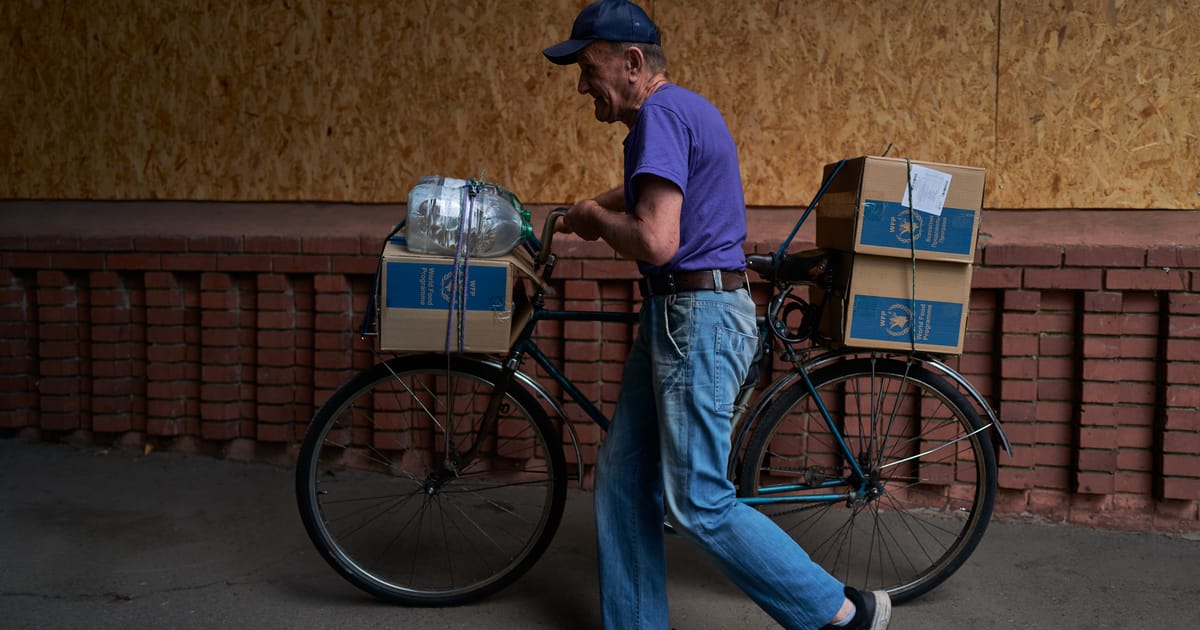
But near the front, the chain between the field and table has snapped. In some areas, no shops function, so WFP delivers food. Elsewhere, shops are still open, but retirees especially cannot afford the prices, and often cannot withdraw their pensions because bank machines no longer work — so the agency hands out cash. Increasingly, it does both because alone neither is enough.
Much of what it hands out is grown close by. The agency buys from farmers near the front, and their harvests become school meals for children in bunker classrooms, including some 20,000 attending classes in Kharkiv’s metro.