

Kyiv’s pilots prepare to fly cutting-edge Rafales against Russian jets, amid a bruising power struggle in Ukraine’s defence leadership.
 Roman Pataj



Every day, the Ukraine Battlefield update newsletter offers a clear look at how the war is unfolding on the ground. Subscribe for free here to get the full text delivered to your inbox.
France will supply Ukraine with its most modern fighter aircraft type. Russians celebrate Zelensky’s mistake. A village two km from the Russian border raises Russian hopes. 159 Russian vessels hit at sea in 12 days. Officials from a private arms company whose ammunition depot was located on the outskirts of Kyiv were arrested. Maps of the day — Sloviansk-Kramatorsk direction; fighting in Kozacha Lopan Videos of the day — new attacks on vessels; the consequences of the tragedy in the Kyiv suburb of Vyshneve; an attack on a Russian Su-24 at a Crimean airfield; a drone fires an unguided rocket at soldiers.
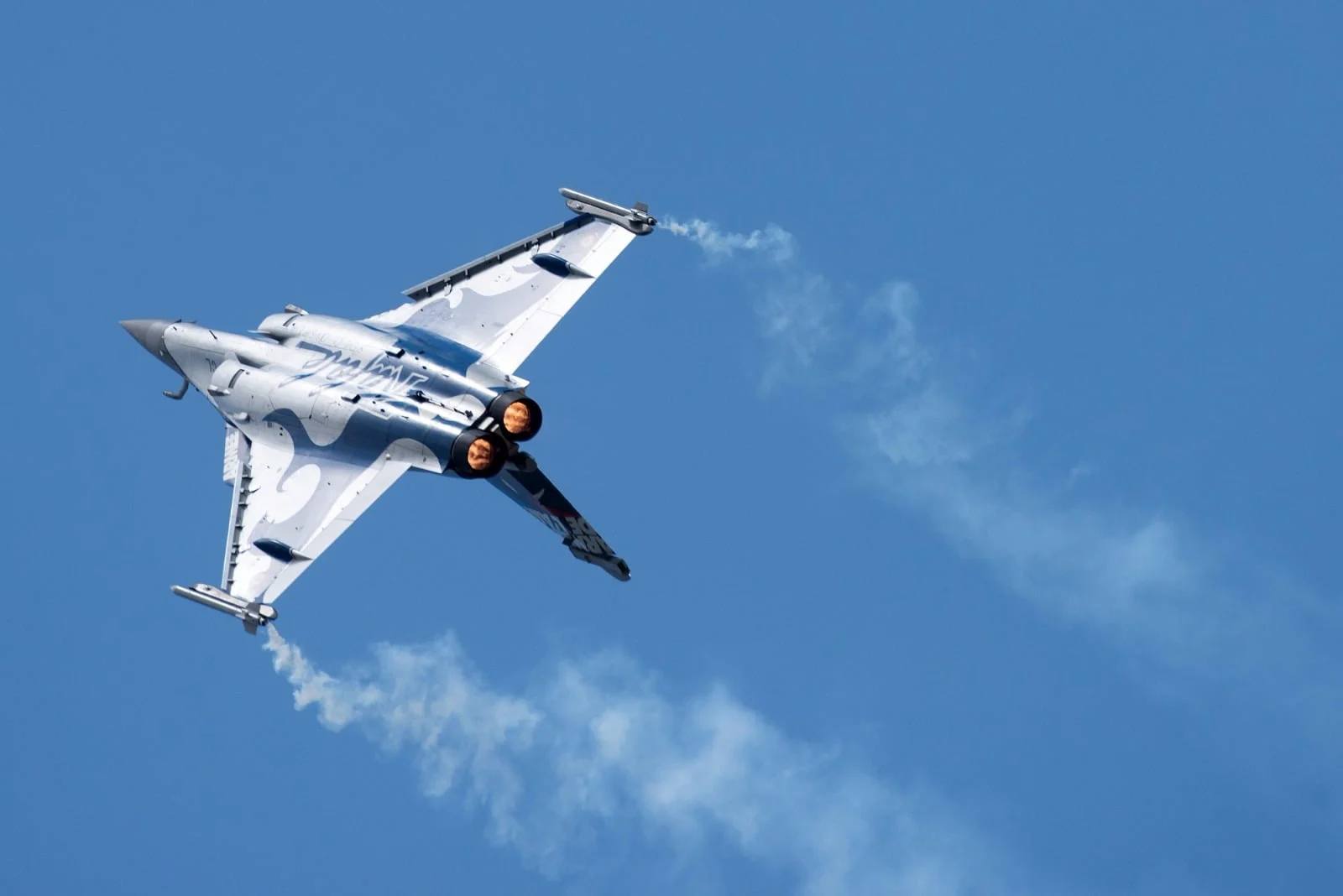
For the first time, Ukrainian pilots will receive aircraft capable of taking on Russia’s most capable types. These are the MiG-29, Su-27, Su-25, Su-24, F-16, Mirage 2000 and Gripen. Ukraine’s air force already operates the first six types. The Swedish Gripen is expected to arrive soon, followed shortly afterwards by the first four French Rafale aircraft out of the 16 agreed. A list of eight types looks like a logistical nightmare. Moreover, the Gripens will initially arrive in the C/D version, to be followed by the more modern E/F models. Ukraine’s aim, however, is to completely phase out old ex-Soviet equipment and switch to Western types. Its air force’s inventory will therefore soon become less diverse.
Until the arrival of the Gripen E/F, which will not come until the end of the decade, France’s multi-role Rafale fighter jets will be the most capable, most modern and most dangerous type on the battlefield for Russia.
Although a Ukrainian F-16 almost certainly shot down a Russian Su-35 fighter jet — it is less likely that it was downed by a Patriot, but the loss has been unequivocally confirmed — air-to-air victories are a great rarity in this war. This is particularly because Ukraine’s air force lags far behind Russia’s in both numbers and quality. It therefore operates over its own territory, where the Russians, too, are afraid to fly because of effective ground-based air defence.
The arrival of the Rafales does not mean that air combat will become routine: there will be too few of them, and they will be too scarce. But Ukrainian pilots will be able to take far greater risks than before.
Not only will Ukraine receive this type of aircraft, but specifically a version that is virtually new and which the French air force itself only began introducing into service in 2023.
Precise information on when they will actually enter combat is not yet known. A joint memorandum by the French and Ukrainian presidents, dated 14 July, stated that training for pilots and mechanics would begin this year, “allowing this type to be deployed in Ukraine as soon as possible”. When the purchase was first discussed in 2025 — with 100 aircraft envisaged overall — Emmanuel Macron spoke of the possibility that the first aircraft could arrive in Ukraine in 2028 or 2029. The wording of the statement makes it clear that this will ultimately happen much sooner, and it is highly likely that, next year — if the war has not ended by then — Rafales will actually be fighting Russia.
They will be F4-series aircraft, which France only recently began introducing and which represent the most advanced version the aircraft has to offer.
The Rafale is a multi-role fighter aircraft capable of engaging both ground and air targets. The presidents’ statement said that it would arrive in Ukraine with the most advanced armaments, including AASM precision-guided bombs, MICA air-to-air missiles and, above all, Meteor missiles. France also agreed to licensed production of AASM bombs and SCALP missiles — the French equivalent of Storm Shadow — beginning by the end of the year.
Ukraine’s Rafales will also have a powerful AESA-class radar. On paper, it has a shorter range than the radars on Russian Su-35s, but in practice it is more effective thanks to more modern technology, and its actual range in air-to-air combat is at least comparable. Combined with Meteor missiles, which have a combat range of more than 200 km, this is an aircraft that could pose a new type of problem for Russia.
This does not, however, mean that Rafales will dominate the skies. There will be few of them, and as the conflict between India and Pakistan in 2025 showed, using an aircraft recklessly or incorrectly can lead to its loss even against an opponent that appears weaker on paper. India lost at least one Rafale in fighting against Pakistan. As Reuters reported at the time, poor Indian intelligence was behind the loss.
Its pilots had been told that Chinese PL-15 air-to-air missiles used against them by Chinese J-10 fighter jets had a range of 150 km, but in reality they can reach targets at a distance of 200 km. The incorrect information gave the pilots a false sense of security, which led to the downing of one Rafale.
Russians celebrate Ukrainian president Volodomyr Zelensky’s mistake. The reshuffle of Ukraine’s government, which has also claimed the popular former defence minister Mykhailo Fedorov, is a major issue in Ukrainian society and the military.
Numerous Russian commentators have focused on Fedorov’s departure, the subsequent protests and disputes among Ukrainians, adhering to the maxim that when an enemy makes mistakes, there is no need to interrupt them. For Russia, this is the first genuinely good news after a long period in which Ukraine seized the strategic initiative in deep strikes and Russia’s advance at the front came virtually to a complete halt. Russia’s battlefield failures were made even more bitter by its domestic economic problems.
Of all the comments from Russia, we have selected one from the Telegram channel Notes of a Veteran. Its final sentence aptly illustrates the essence of the Russian position: “In the contest between Fedorov and Syrsky, we support both sides.”
The author referred to the fact that a dispute had broken out between the dismissed defence minister and army commander Oleksandr Syrsky, in which Fedorov is seen as a young and innovative manager, while Syrsky is criticised as a product of the Soviet school.
Russians have noted that criticism of the Skala assault regiment, Syrsky’s “brainchild”, over which he exercises personal supervision, has appeared frequently recently. They attribute the publication of this criticism to Fedorov, who they believe was trying to replace commanders close to Syrsky. This is only Russian speculation, which can neither be proved nor disproved, but, as Notes of a Veteran wrote, “personnel changes will create chaos and further weaken already ineffective units, which will suit us”.
A village two km from the Russian border raises Russian hopes. Kozacha Lopan lies about 30 km north of Kharkiv and is one of the places where Russian cross-border incursions are seeking to stretch Ukrainian defences. In recent weeks, Russian commentators have written about the fighting there as if it were something significant. In reality, it is a large village or small town that had a population of five thousand before the war, and Russian forces have barely reached its outskirts. According to this map, they have advanced by just under two km in fighting that began in June.
Kozacha Lopan sector, Kharkiv Oblast.
In the past weeks, the situation worsened quite a bit for the Ukrainians, who were not able to fully stabilize the situation.
The Russians infiltrated along the marked routes and, as of the time of writing, were able to reach at least 60%… pic.twitter.com/PF9Qu0USiU
— Playfra (@Playfra0) July 16, 2026
Ukrainian analyst Petrenko also examined the same location on Friday. His map, which is almost identical to the previous one, also shows on the right the area into which Russian forces pushed in spring 2024 in an effort to move closer to Kharkiv, but where they were quickly stopped and pushed back somewhat.

In the Kramatorsk direction, Russian infantry managed to infiltrate the northern part of the village of Vasiutynske. Once detected, however, the group was attacked by drone operators from the Ukrainian Armed Forces, and the situation was quickly stabilised. From a strategic perspective, Russia’s main objective regarding Sloviansk and Kramatorsk is currently not a deep advance, which would require a long time, but carrying out local infiltrations and then creating a major information pretext around them. This would allow Russia to declare the alleged start of the battle for Donbas’s last major cities, which could be used to boost Russian troop morale and create the appropriate information backdrop.
159 Russian vessels hit at sea in 12 days. Since Thursday, 12 more have been added, all of them in the Black Sea. Russia is still attempting retaliation, but hits only one or two vessels a day. It is also still impossible to determine from the published videos how many of the 159 vessels have been put out of action and how many were only lightly damaged. Nevertheless, this is one of the Ukrainian army’s most successful drone campaigns of the entire war.
💥 USF Operators Struck 12 More Enemy Vessels in the Black Sea.
On the night of July 17, USF units continued their operation against russia’s shadow fleet. This night, the following strikes were confirmed:
💥9 cargo ships. The strikes were carried out by operators of the 9th… pic.twitter.com/5BS4R7MWxK
— 🇺🇦 Unmanned Systems Forces (@usf_army) July 17, 2026
Officials from a private arms company whose ammunition depot was located on the outskirts of Kyiv were arrested. “Seven killed. Twenty one injured. More than 600 evacuated. Thirteen hectares of built-up area in ruins. These are not merely the consequences of another Russian missile strike. The investigation has established that the scale of the tragedy was compounded by the negligence of specific individuals,” Ukrainian Prosecutor General Ruslan Kravchenko said about the events in the Kyiv suburb of Vyshneve.
According to Ukrainska Pravda, those individuals are the director and deputy director of an unnamed arms company whose depot was hit by a Russian Iskander missile on the night of 5 to 6 July. The devastation described above was caused by secondary explosions of stored ammunition, which continued for several hours.
Not only was the military depot located in the middle of a residential area, contrary to the rules of warfare, but Kravchenko said that Ukrainian laws, government regulations and a decision by the general staff explicitly prohibited this. The investigation also found that, in addition to violating legislation, the depot did not meet even basic safety requirements. The nearest buildings, for example, stood just 24 metres from the depot complex.
The investigation therefore claims that the authorities were unaware of the depot’s location. However, immediately after the tragedy, Hromadske published a report in which it quoted, among others, local resident Ihor Ivanov: “I knew that sooner or later they would hit us, because it was not the first time they had [bombed] us. They had not managed to hit the target. But I knew that sooner or later they would hit us.”
Video from 6 July showing the exploding depot:
Зеленський заявив, що об’єкт у Вишневому, який уразили під час російського обстрілу, був складом боєприпасів «Укроборонпрому».
Про це він сказав під час спілкування з журналістами
Відео: hromadske pic.twitter.com/EegOd0BzhP
— hromadske (@HromadskeUA) July 9, 2026
This is what the destroyed area looks like today:
Videos of the day
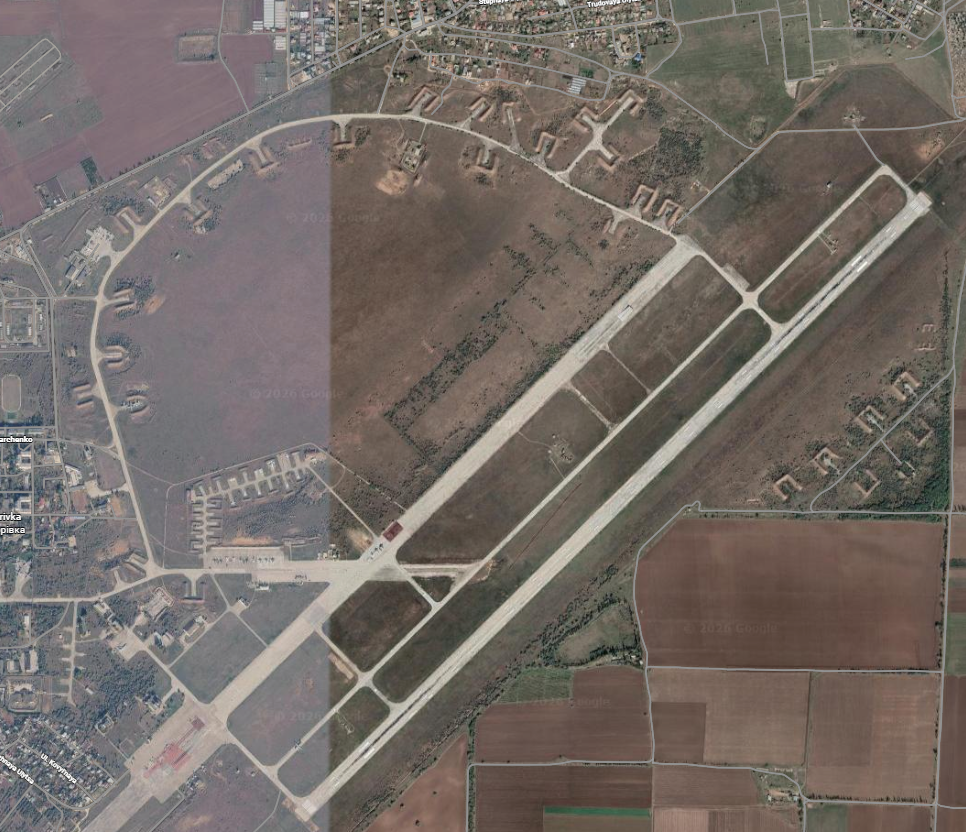
A Su-24M belonging to a Russian naval aviation unit at Saky airfield in Crimea. Ukrainians claim that they hit it while it was preparing for take-off. Even if that is true, it would not have been a combat flight. No weapons or external fuel tanks are mounted beneath the aircraft.
Satellite imagery of the airfield indicates that the attack took place at a location that is an extension of the aircraft parking area and is not directly connected to the runway. This location can be seen in the centre of the lower half of the attached image. At the time the image was taken, there was no aircraft there, so this was not an aircraft that had been parked and left unused for a long time.
A drone attacks a ground target with an unguided rocket. Unmanned aircraft are taking on an increasing number of the functions traditionally performed by conventional weapons systems.
What are the losses
No change on Friday.
Russia has verifiably lost 23,837 pieces of heavy equipment (23,806 on Tuesday, 7 July). Of these, 18,815 (18,785) were destroyed by Ukraine, 993 (992) damaged, 1,199 (1,199) abandoned by their crews, and 2,830 (2,830) captured by the Ukrainian army. This includes 4,427 (4,424) tanks, of which 3,329 (3,327) were destroyed in combat. Ukraine has lost 11,690 (11,683) pieces of equipment, of which 9,123 (9,068) were destroyed, 689 (687) damaged, 687 (683) abandoned, and 1,191 (1,191) captured. This includes 1,443 (1,440) tanks, of which 1,104 (1,101) were destroyed in combat.
Note: Neither side regularly reports its own dead or destroyed equipment. Ukraine publishes daily figures on Russian casualties and destroyed equipment, which cannot be independently verified. This overview uses data from the Oryx project, which has compiled a list based exclusively on photographically documented equipment losses since the start of the war.