




New exhibition uses original video recordings of Securitate interrogations to reconstruct communist regime’s mechanisms of repression – and counter growing nostalgia for the communist period.
 Marian Chiriac



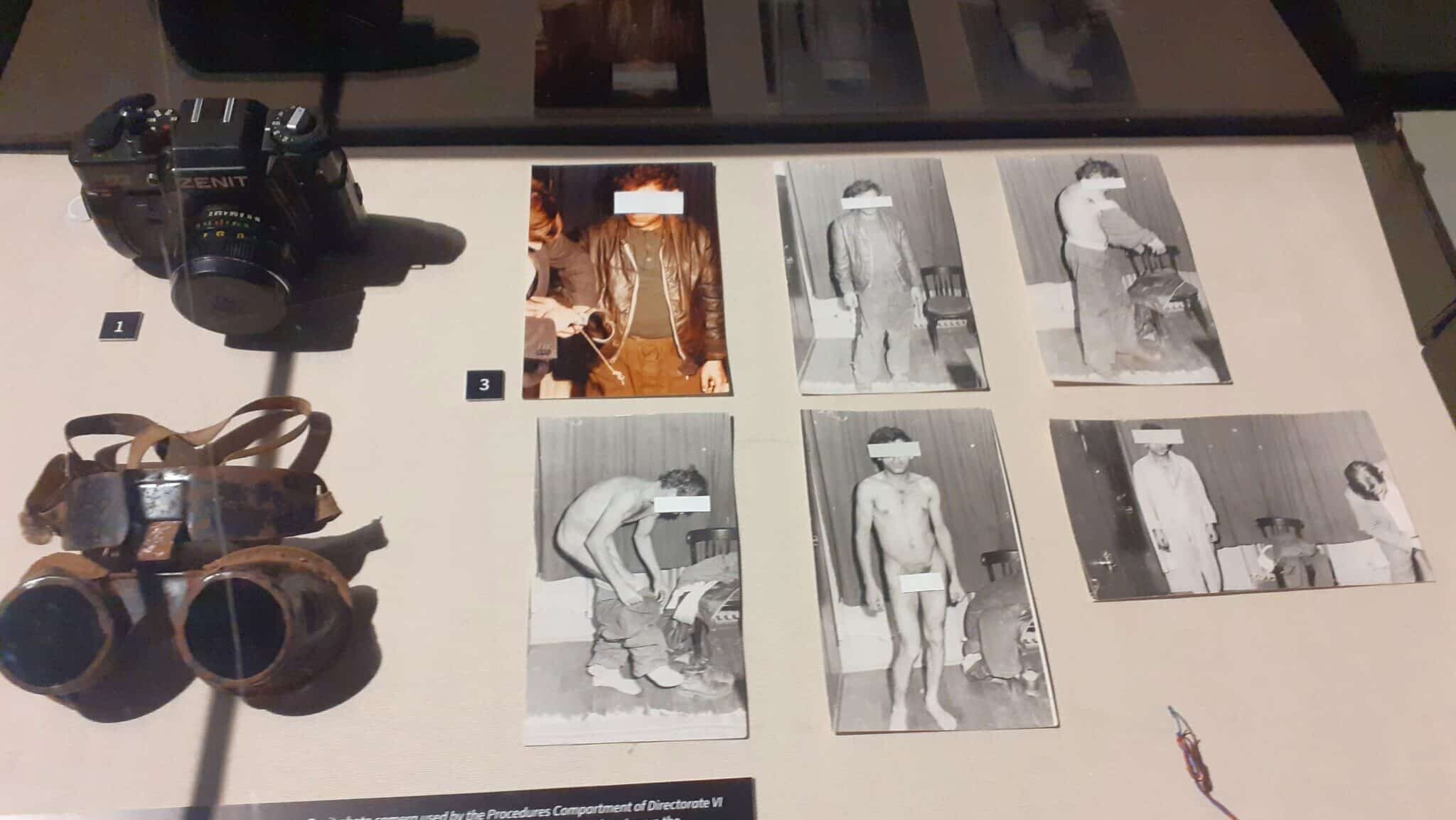
The exhibition focuses on the cases of three people investigated by the Securitate, including Geangu, and features a series of previously unseen interrogation tapes. The recordings offer a rare insight into the psychological pressure, threats and coercive methods employed against political detainees during the final weeks of the communist regime.
“We wanted to show how the Securitate operated, how investigations were conducted, how officers built criminal cases and what actually happened inside the interrogation rooms and detention facilities,” said Mihai Demetriade, a historian at Romania’s National Council for the Study of the Securitate Archives, CNSAS, and the exhibition’s curator. “Until now, very little was known about these procedures,” he added.
According to Demetriade, the newly uncovered material shows that the Securitate’s abuses extended beyond psychological intimidation. “We now have proof that violence was used inside detention facilities. This was not limited to psychological pressure, but also included physical torture, particularly beatings,” he added.
Only those cases considered most serious under the communist regime were brought to the Central Detention Centre in Bucharest.
These included offences classified as “hostile propaganda against the state order”, such as the critical letters written by Geangu, displaying anti-regime messages in public places, distributing leaflets or attempting to cross the border illegally. The prison sentences for such offences ranged from five to 15 years.
Far more common were so-called “preventive” actions. People suspected of engaging in activities deemed hostile to the regime were summoned to Securitate headquarters, interrogated and threatened with punitive measures against both themselves and their families. They were subsequently placed under surveillance and kept under constant monitoring.
The Securitate was established after the communist takeover in 1948 to protect the new regime through surveillance, repression, censorship and intimidation.
At its peak, it had some 11,000 officers and relied on a vast network of informers, estimated at around 600,000 people, although the exact figures remain disputed.
Giving victims ‘a voice and a place’