Nirha Efendic was 16 when her father and brother were killed in 1995. Photographs collected for a memorialisation project about the Srebrenica genocide are a powerful reminder of her family’s last moments together.
 Lamija Grebo



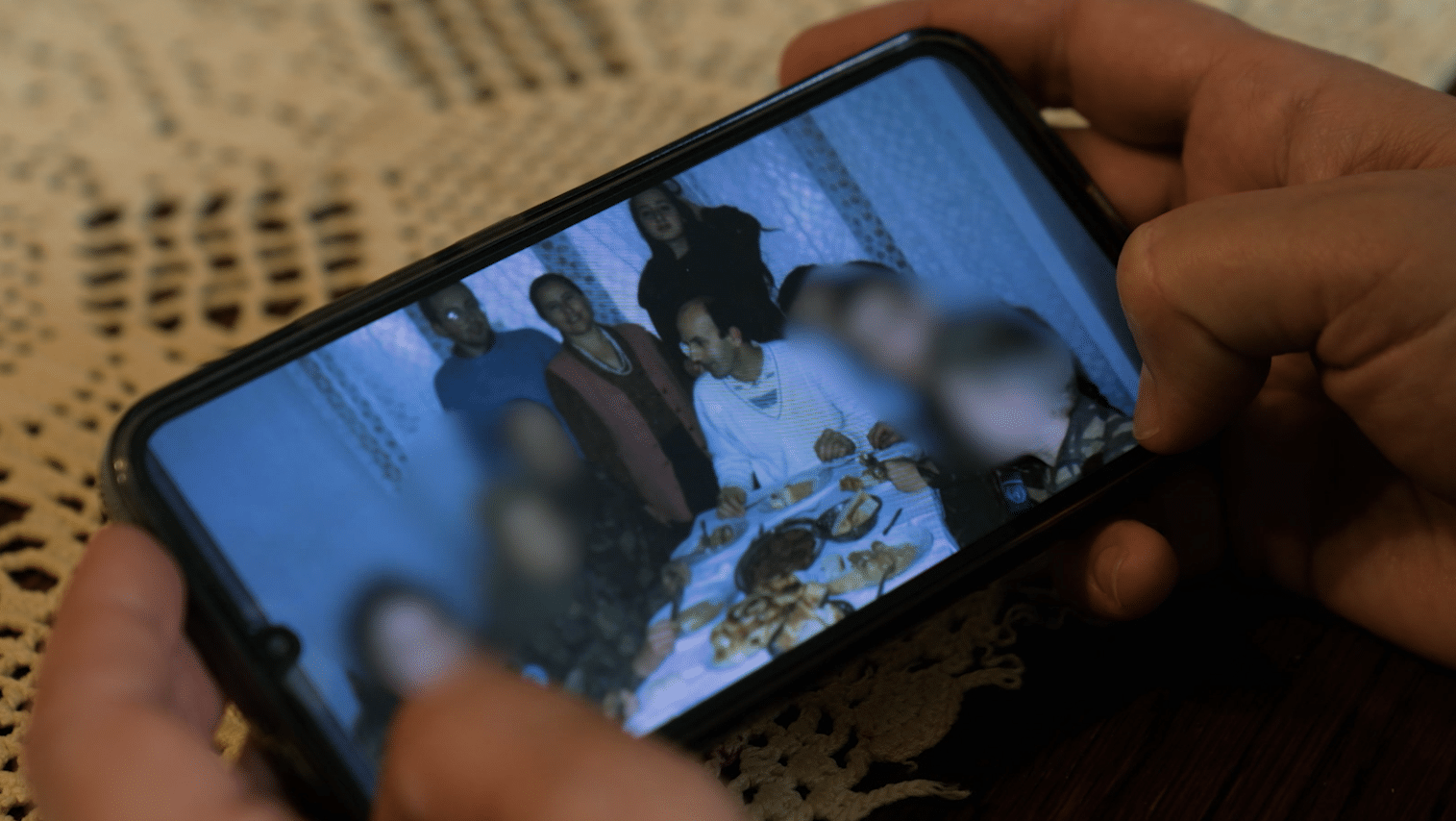
Efendic received various pieces of information about the fate of her loved ones. According to some sources, her father was killed in Kravica; according to others, in Bratunac. Her brother Fejzo, she later learned, was killed in Branjevo.
Her father was found in a secondary mass grave in Zeleni Jadar and buried at the first annual collective funeral of Srebrenica victims, while Fejzo’s remains were buried ten years later. To this day, not all victims of the genocide have been found and buried.
For Efendic, visiting the cemetery at the Memorial Centre represents a meeting with them and an opportunity for conversation.
“I feel a kind of relaxation of the soul because we need that place of encounter – not only a place of mourning, but of reassembling the soul. Just as the body needs to be made whole, the soul also needs to be made whole, because pieces of it have gone everywhere,” she says.
“Here they come together again like a mosaic, at least to some extent, and we experience a small step of healing,” she says.
After leaving Srebrenica, a new struggle began for Efendic and her mother Fadila. Her mother went to Germany, while Efendic insisted on staying in Zagreb in Croatia to continue her education at what is now the Islamic Gymnasium.
“I wouldn’t have asked my mother to let me stay if, in those few days, I hadn’t experienced my first beautiful moments that helped heal my soul – that was encountering the recitation of the Koran with the hafizes who were there,” she says, adding that she was not even aware at the time how important that decision was.
After finishing high school, Efendic returned to Bosnia and Herzegovina with her mother, graduated from the Faculty of Philosophy in Sarajevo, and later completed her master’s and doctoral studies.
There was one more obligation – to find a way to tell her own story. That is how her book Kopča (“The Clasp”) came about – not as a call for revenge but as an attempt to tell her pain in a way that could heal others.
“By writing it, I was healing my own wounds, and I wanted others who had gone through similar experiences, by reading my text, to heal alongside me – to try to come out stronger: to say what needed to be said, but in the most beautiful possible way – not as a call for revenge, but as a call for love. Love for people, for God’s creation,” she says.
More than 30 years after the genocide in which more than 7,000 men and boys were killed by Bosnian Serb forces, Efendic and her mother sit in their family home in Potocari, looking at family photographs. In the pictures are the smiling faces of those who are no longer with them.
Despite all the losses inflicted by the war and the genocide, Efendic says he has tried to be better than those who harmed her brother and father, whose expression the last time she saw him still remains with her.
“That look of his, that ‘Keep going’ look, has followed me to this day. Life is full of different trials; it’s multi-layered. When you think you have won all battles or lost them all – that’s not true, you don’t know. But to keep going is what you can and must do,” she says.
She followed his advice then, and still does now: “I left. I moved forward. I’m still doing that.”