alqem, a Munich-based DeepTech startup building an AI-driven engine to discover and commercialise next-generation materials, has raised €8 million in pre-Seed funding in their effort to establish a European-led supply chain for materials. The round was co-led by UVC Partners and Union Square Ventures. “For the first time, we have a
 David Cendon Garcia



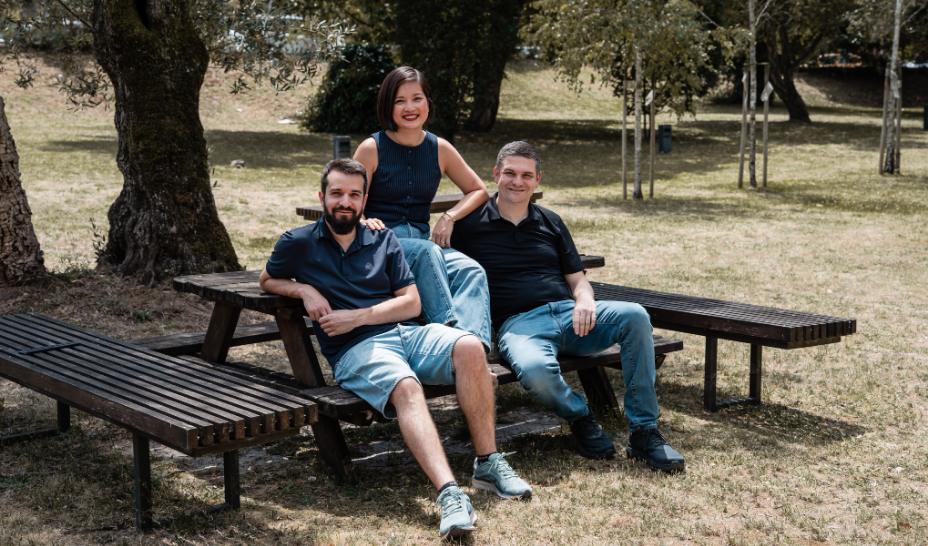
alqem, a Munich-based DeepTech startup building an AI-driven engine to discover and commercialise next-generation materials, has raised €8 million in pre-Seed funding in their effort to establish a European-led supply chain for materials.
The round was co-led by UVC Partners and Union Square Ventures.
“For the first time, we have a map of the materials universe. Not just a few known compounds, but hundreds of millions of possibilities we can now systematically explore and bring to the world. Materials that will make electric vehicles more energy efficient, wind turbines more powerful, and critical supply chains independent from single-country control,” says Dr. Hanh Nguyen, CEO, alqem.
2026 coverage points to continued funding activity across AI-enabled materials discovery, critical raw materials, advanced manufacturing and adjacent industrial DeepTech.
Directly comparable examples include London-based Polaron’s €6.7 million raise for AI-led materials science and Paris/Boston-based Alice & Bob’s €3.4 million ARPA-E award for rare-earth-free magnet discovery using quantum computing. In Germany, Würzburg-based WeSort.AI raised €10 million to scale AI-based recovery of critical raw materials, making it a same-country comparator focused on supply-chain resilience.
Across 2026, funding in direct and adjacent materials-related companies totals approximately €123 million.
“alqem is a startup with world-class science translated into a company tackling one of Europe’s most strategic industrial challenges. Advanced materials sit at the heart of the technologies that will define the next decades, from clean energy to mobility to defense. alqem has the unique scientific foundation with the entrepreneurial drive to build a category leader in this field,” says Amanda Birkenholz, Principal, UVC Partners.
alqem was founded in 2026 by Dr. Hanh Nguyen (CEO), a chemicals and energy executive with 15+ years across McKinsey, Unilever, and OCI Global, where she led billion-euro clean energy and sustainability programmes; Dr. Tiago Cerqueira (CTO), who co-developed Alexandria; and Prof. Milan Allan (CSO), Chair of Experimental Physics, Quantum Metrology and Sensing at LMU Munich.
alqem is building its discovery engine on two proprietary foundations: a database of predicted materials “vastly larger than anything previously available to the field“, and high-quality training datasets for material properties that did not exist before.
To close the loop between prediction and experiment, the company also brings in-house synthesis capability.
The company explains that only a small fraction of theoretically possible crystalline compounds have ever been synthesised. Hundreds of millions of possibilities remain undiscovered. At the same time, the materials we rely on are increasingly concentrated in the hands of a few.
For example, advanced permanent magnets, which are critical to electric vehicles, wind turbines, robotics, and defence systems, are roughly 90% produced in China, and recent export restrictions have turned materials supply into a geopolitical flashpoint.
“We start where the need is greatest, rare-earth-free magnets, a material the world urgently needs and hasn’t been able to replace for decades. But the engine we are building is not limited to one material class,” says Dr. Nguyen.
The discovery engine has reportedly produced a pipeline of rare-earth-free magnet candidates, with predicted performance validated against experimental data. By narrowing hundreds of millions of possibilities down to a tractable shortlist and automating experimental data analysis steps that typically take hours, the engine becomes more accurate with every iteration.
Three technical foundations underpin the discovery engine.
The first is al-mine: a proprietary database of predicted stable crystalline compounds, deliberately weighted away from rare-earth, toxic, and costly elements. The second is al-oracle: a set of high-quality, domain-specific training datasets for material properties, assembled by the team over the years. Both build on Alexandria, the open materials database co-built by alqem co-founder Dr. Tiago Cerqueira (CTO) and scientific advisor Prof. Miguel Marques. The third foundation is in-house synthesis and characterization capability, anchored by co-founder Prof. Milan Allan, Chair of Experimental Physics at LMU Munich.
“At USV we have a thesis around AI learning loops for the real world that create proprietary datasets. The alqem.ai team is leveraging their experience with building one of the largest open data sets to now explore innovative materials, starting with magnets. We are excited about their approach,” says Albert Wenger, Partner, Union Square Ventures.