


As Pride Month comes to a close, the big question is not how many people took to the streets to march, but whether LGBTQ+ individuals feel safer for the rest of the year.
 Ognjen Ciric



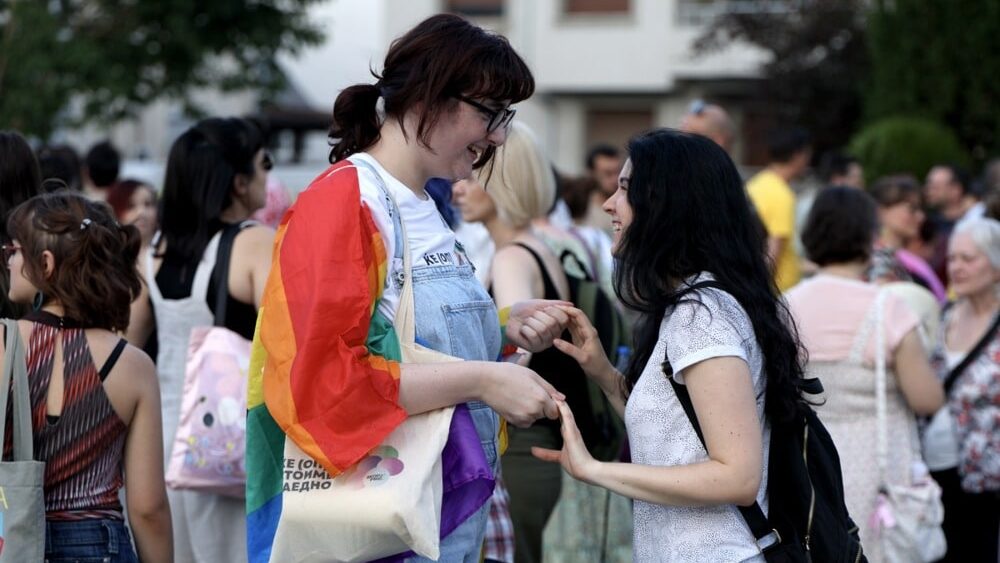
In recent years, we have increasingly witnessed attacks against LGBTQ+ people in Belgrade and other cities throughout the region, for example in Nis, over the gathering for the Pride caravan, but also in Bor, Krusevac, Novi Sad, Kragujevac and many more.
Some of these attacks make it into the media; many never become public. They remain known only within circles of friends, in group chats, as warnings about where not to go, which streets to avoid, and when it is better not to show affection in public.
Among the most recent attacks on the remaining queer spaces were those targeting venues such as Mornar, a queer pub in central Belgrade, the sustained attacks on the Pride Info Centre that ultimately led to its closure, as well as attacks on other spaces belonging to organisations working on LGBTQ+ and broader human rights issues.
In this way, violence affects not only the individual or space that was attacked. It produces a wider effect. It narrows the space of freedom for the entire community, and when attacks are not adequately prosecuted, what is there to prevent the next one?
When someone gives up holding hands with their partner, when they avoid a particular café, park, or neighborhood, when they calculate how they should look before leaving the house, or erase part of themselves to pass unnoticed, the space formally remains the same but becomes smaller. A city that belongs to all of us begins to divide into zones of safety and zones of caution.
This is perhaps one of the most dangerous forms of discrimination because it is often invisible. It is reflected not in prohibition but in the constant assessment of risk; in the habit of adapting one’s freedom to circumstances.
For that reason, the question is not only whether Pride will be respected or visible. The question is how many people can live without fear during the remaining 11 months of the year. If they can, it means that the real problems have been addressed. And as far as I can tell, following the example of the first Pride in Belgrade back in 2001, also known as the “Bloody Pride”, over the course of 25 years, the queer community has gained neither safety nor space through visibility and protection alone. Instead, it has created that space itself in order to survive.
Addressing violence has largely been carried out by NGOs and activists, and they deserve gratitude for that. But in the anaesthetised public sphere in which we live when it comes to this issue, the LGBTQ+ community also needs the support of the broader public so that human rights do not remain a topic reserved only for those directly affected but become a matter of social responsibility for all of us. No community can carry the burden of fighting for rights on its own when those rights, in a democratic society, should belong equally to everyone.
Amid the political changes we have been experiencing over the past two years, many issues have been raised across the political spectrum. Yet what I will call the LGBTQ+ ‘minority’ – although I do not believe that term is truly appropriate – continues to be pushed aside, constantly forced to wait for every wave of populism and every other issue to pass before its turn finally comes.
Still, I believe in my community, and I know it does not wait. It fights in every way it can, using every means available to it.
Nevertheless, another Pride month has passed, and we seem to be standing still. But we are not standing still because everything is the same. We are standing still because oppression and the shrinking of our spaces are growing ever greater, while the community is becoming proportionally stronger – yet visibly more alone.
Ognjen Ciric is a human rights activist and new media artist based in Belgrade. He works in the multimedia department at the Youth Initiative for Human Rights, YIHR.
The opinions expressed are those of the author only and do not necessarily reflect the views of BIRN.