The US is emerging as the main partner for Libya and Morocco, with the EU likely to see its own influence in North Africa diluted in the process.
 Benjamin Fox



The EU has spent billions of euros trying to cosy up to authoritarian regimes across North Africa, as part of its efforts to limit migration and build relations on counter-terrorism and security. But now it appears, in Libya and Morocco at least, that the EU has been Trumped.
Libya has been split for more than a decade since stalemate in the country’s civil war led to rival administrations being formed in the capital Tripoli – home to the government recognised by most of the international community – and in Benghazi in eastern Libya, run with the support of the Libyan National Army led by warlord general Khalifa Haftar. But in recent months the two sides have agreed a unified budget – the first since 2014 – and now roadmap towards elections next February.
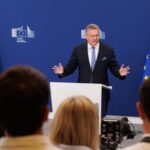
On Friday (26 June), the ‘Libya National Initiative’ held a press conference at the Press Club in Brussels to “present a credible pathway forward, moving Libya from crisis management to solution making, and towards the election of a new executive authority.”
It added that “Libya’s stability is inseparable from the broader stability of the Mediterranean region, and the European Union has a strong and direct interest in a peaceful, stable and unified Libya.”
That is all true enough. Yet the momentum towards a united Libya has come from the United States, specifically Massad Boulos, father-in-law of Tiffany Trump, and US president Donald Trump’s Africa envoy.
The Trump administration is not brokering political harmony for its own sake. It wants unfettered access to Libya’s oil and, potentially, a permanent military base on its territory.
The settlement proposed by Boulos would install Haftar’s son Saddam as head of a new presidential council while keeping Tripoli-based prime minister Abdel Hamid Dubaiba in post, prior to elections being held.
That the Trump administration has sidelined the United Nations in attempting to broker a peace deal was clear from a Security Council resolution in April, drafted by Britain, which called for payments for crude oil exported from Libya to be routed exclusively through accounts of the National Oil Corporation at the Libyan Foreign Bank.
In April, the US Department of Defense launched its Flintlock 26 manoeuvres, a joint counter-terrorism operation with the Italian and Libyan army, at a training centre in Sirte, could also lead to a permanent presence for the US military’s Africa Command (AFRICOM) in Libya.
Along with access to critical minerals, defence and security cooperation is the Trump administration’s main priority in its relations with Africa. Since being forced to leave its AFRICOM base in Niger in 2024, as part of the military junta’s efforts to kick European and American troops out of its country, the US has been seeking an alternative.
And Libya is not the only game in town for Trump.
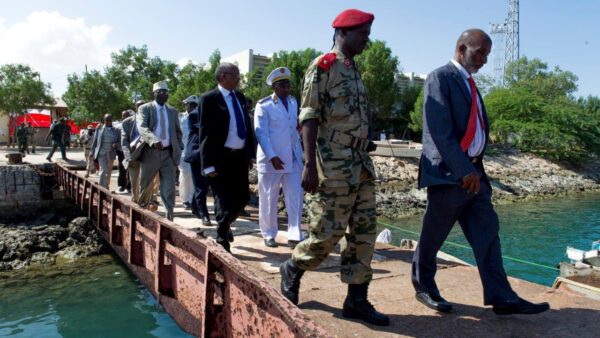
On the Horn of Africa, the breakaway republic of Somaliland, which is seeking independence from Somalia, has offered a military base to the US – as well as a navy base to Israel – in exchange for Washington recognising its statehood.
More significant for the EU’s defence and security interests is Washington’s designs on Morocco.
Earlier this month, the US Senate Armed Services Committee introduced a clause to a new defence law that orders the Pentagon to create a 10-year roadmap to make Morocco its key military partner in Africa. That would codify a bilateral defence agreement signed by Washington and Rabat in April and turn it into legislation.
Washington already sells large volumes of weaponry to Morocco and has increased sales since Trump recognised Rabat’s sovereignty over Western Sahara, a disputed territory to Morocco’s south. Since then, France, Spain and the EU as a whole have changed their policy and backed Morocco’s claims to the territory.
The EU has also sought to strengthen its relations with Morocco, its main trading partner in North Africa and an ally on migration control. EU Commission officials have also held talks with rival administrations in Libya. But the bloc appears to have been left behind.