Behind Croatia’s polished EU image, there is a ruling party quietly tightening its grip on judges and war history alike, blurring the line between mainstream conservatism and the radical right.
 Anastasiia Furman



Croatia has established itself in the EU as a reliable partner, yet tensions are growing inside the country between the liberal and conservative parts of the political scene. According to political scientist Anđelko Milardović, prime minister Andrej Plenković displays elements of authoritarianism. “When one person decides about everything, it is not good for democracy,” he warned in an interview.
Unlike neighbouring Hungary, which often entered into conflict with Brussels, the Croatian leadership has so far not deviated from the European Union mainstream – it supports anti-Russian sanctions and helps other Balkan states with their integration into the EU.
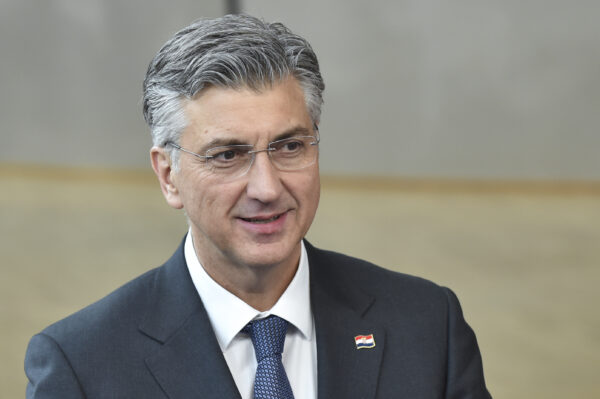
The current prime minister Plenković, who has been in power for three consecutive terms, is often described as a liberal and a loyal ally of Brussels. For a long time, he managed to maintain a fragile balance between European demands and the expectations of the conservative wing within his own party and society.
Last summer, however, this began to change.
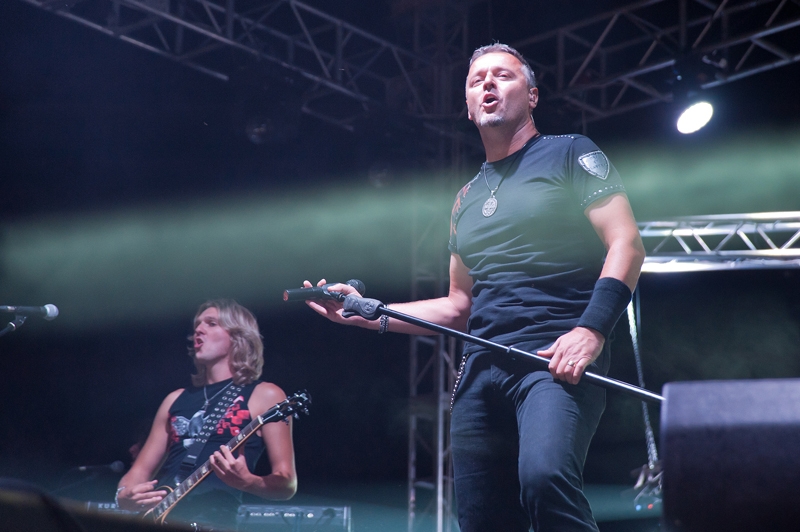
The moment that launched something of a new era in local politics was a mass concert by controversial rocker and national star Marko Perković, who performs under the nickname “Thompson”, after the type of weapon with which he fought in the Croatian war of independence between 1991 and 1995.
Perković is notorious for his nationalist rhetoric and links to the far right. One of his best-known songs begins with the Ustasha salute “Za dom spremni!” (Ready for the homeland!), which refers to the Croatian regime that collaborated with the Nazis during the Second World War and carried out genocide against Jewish, Serbian and Roma populations.
🇭🇷 Today, over 450,000 people gathered at Zagreb’s Hippodrome for a concert by Marko Perković Thompson, marking the largest ticketed concert in Croatia’s history. Thompson, known for his nationalist themes and associations with Croatia’s World War II-era Ustaše regime, has been a… pic.twitter.com/M7QoJkQOPP
— DD Geopolitics (@DD_Geopolitics) July 5, 2025
Although Thompson’s performances had previously been banned abroad because of their extremist subtext, his popularity at home is at its peak.
The July concert at Zagreb’s hippodrome was attended by an incredible half a million people for a country the size of Croatia. Despite the fact that fascist slogans were openly shouted in the crowd and symbols of the Ustasha regime appeared, the police present did nothing.
The whole incident was given a political dimension by the top levels of government. Prime minister Plenković himself had his photograph taken with Perković at the dress rehearsal, and a number of other ministers and lawmakers proudly declared their attendance at the concert.
This concert had a kind of mobilising effect that fully manifested itself in November. Croatia traditionally had the largest number of commemorative events linked to the war in Yugoslavia, which ended thirty years ago. In the past year, however, it looked much more like a settling of scores with the remaining Serbs in Croatia and, newly, also with foreign workers from Asia. Football ultras joined forces with representatives of war veterans and repeatedly tried to disrupt cultural and sporting events organised by Serbian associations. This happened in several cities, from Split through Zagreb to Vukovar.
In this interview you will read:
Why the topic of the Second World War resonates in Croatian society. How the prime minister’s foreign and domestic policies differ. Whether the power of the far right is growing.
You recently said that in the past six months Croatia has resembled the Weimar Republic. Why?
Because it sometimes seems to me that politics and political actors look similar. And we know it was a very dangerous period. If you know what the Weimar Republic was and what followed, then from my point of view the situation at the end of 2025 was very, very dangerous. (The Weimar Republic is the term for the German state after the fall of the monarchy in 1918 until the Nazis came to power in 1933, editor’s note.)
Can you be specific?
Specifically, I mean the sharp conflict in communication between different actors on the political scene. The way we deal with the past. And also the revival of ideologies from the Second World War.
Anđelko Milardović is a political scientist, sociologist and professor of political science. He is a researcher at the Institute for Migration and Nationalities in Zagreb and also the founder and head of the Centre for Political Science Research and the think tank Institute for European and Globalization Studies. He is a visiting professor at universities in Zagreb, Dubrovnik, Osijek, Koprivnica and Varaždin. He lives and works in Zagreb.
Do you mean the record attendance at last year’s concert by Marko Perković Thompson, who is known for using the Ustasha salute “Ready for the homeland!”, and the support expressed for him by top officials, including prime minister Plenković?
Yes. And also the reaction that followed.
What was that reaction?
A reaction from the left, from the liberal centre, against this type of activity and against linking elements of mass culture with politics.
Why do you think it is wrong to talk about the past?
We still have a conflict between the ideology of the partisans and the Ustashas, and so on. That should be a topic for historians. But this story has become part of everyday politics.
We are prisoners of the past. We should live our lives today and think about what will happen tomorrow, but various actors are pulling society back to the time of the Second World War. Thanks very much, but I do not share this view. My position is very critical – I do not want to be a prisoner of the past.
Why do you think these topics still resonate in public debate?