There is overwhelming evidence of UAE support to Sudan’s Rapid Support Forces. But the EU is unwilling to jeopardise its close economic and security relations with Abu Dhabi – instead, the bloc continue to issue abysmally weak statements referring only to ‘external actors’ fuelling the war in Sudan.
 Joey Shea



Late one night in April 2025, a Colombian private military contractor was leaving the United Arab Emirates under unusual circumstances.
“They brought us in hidden, clandestinely, through the back of the airport,” he told me. “It was very hidden.”
He was departing Abu Dhabi after having received military training from Emirati nationals at a UAE military base.
That evening, his flight made a quick stopover in eastern Chad before its final destination: Nyala, the capital of south Darfur and de facto capital at the time of the Rapid Support Forces (RSF) – an armed group that has repeatedly carried out war crimes and crimes against humanity in the conflict with Sudan’s military for control of the country.
The contractor was one of hundreds of former fighters from Colombia who, according to a new Human Rights Watch report, were apparently hired by the Global Security Services Group (GSSG) to fight alongside the RSF.
The GSSG, an Abu Dhabi-based security company, and its CEO, Mohamed Hamdan Al Zaabi, have strong political, business and familial links with the most senior members of the UAE’s ruling family.
The report adds to overwhelming evidence of UAE support to the RSF – a reality that, three years into the conflict, the European Union and its members states are still wary of calling out.
The bloc is unwilling to jeopardise its close economic and security relations with the country.
Instead, the EU and its member states continue to issue abysmally weak statements referring only to “external actors” fueling the war in Sudan.
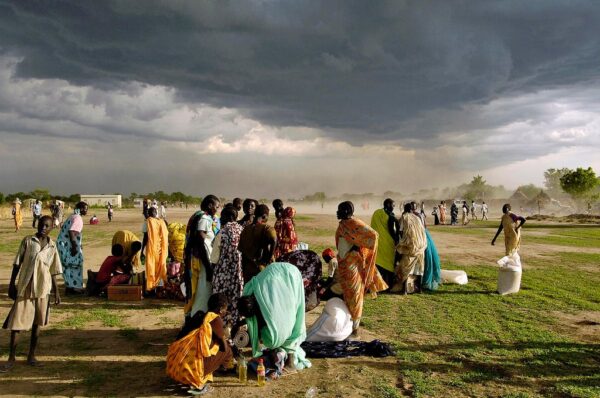
The UAE has helped fuel a humanitarian catastrophe that forced 14 million people to flee their homes and 4.4 million to leave Sudan. According to UNHCR, the UN refugee agency, 14,000 of them reached Europe in 2024 and 2025, while millions others face racism, abuses or dire humanitarian conditions in neighbouring countries.
Human Rights Watch also located Colombian fighters at the site of grave abuses during the fall of North Darfur’s capital, El Fasher, in October 2025.
El Fasher was, until then, the only remaining city in the region still under the control of the Sudanese Armed Forces and its allies.
‘Hallmarks of genocide’, tepid Brussels statements
Foreign fighters, most likely the Colombians, stood by while RSF fighters massacred men and women, including people with disabilities, and abducted many for ransom – atrocities in which UN investigators found “hallmarks of genocide.”
Emirati authorities have continued to maintain blanket denials. But the UAE is a highly-centralised security state that employs advanced mass surveillance, making it implausible for authorities to deny they did not know these private military contractors had transited through sensitive UAE military and government sites in the UAE before travelling on to Sudan.
Diplomats tell us time and again they are pursuing “private engagement” with the UAE on Sudan and other files, including the Emirates’ brutal repression of dissent.
But EU concerns over the UAE’s abusive foreign and domestic policies are relegated to wholly ineffective bilateral human rights dialogues, despite calls for more robust approaches.
Three years into the Sudan conflict, and nine since the UAE’s arrest of Ahmed Mansoor, its most prominent human rights defender, this approach has clearly failed to move the needle.
The EU should finally use the leverage provided by bilateral trade negotiations with the UAE to press its authorities to end support for the RSF, and step up its game to address the country’s abysmal rights record.
Toothless statements without direct reference to the UAE are a luxury Sudanese civilians cannot afford.
The EU and member states should break their silence, investigate the Global Security Services Group and its CEO, and consider targeted sanctions against them. It also needs to adopt an EU-wide arms embargo against the UAE.
The EU cannot genuinely pride itself on providing much-needed humanitarian aid to war-affected civilians in Sudan without acting and calling out the UAE’s role by name.
It is in Europe’s interest to stop witnessing further RSF atrocities unfold with the UAE’s support, and it should make clear there will be no impunity both for those responsible for the crimes, and those complicit in them.