An analysis of judiciary proceedings involving the media shows a record rise in attacks on journalists in Serbia and the use of frivolous lawsuits aimed at silencing independent and critical voices, a new report shows.
 Radmilo Markovic



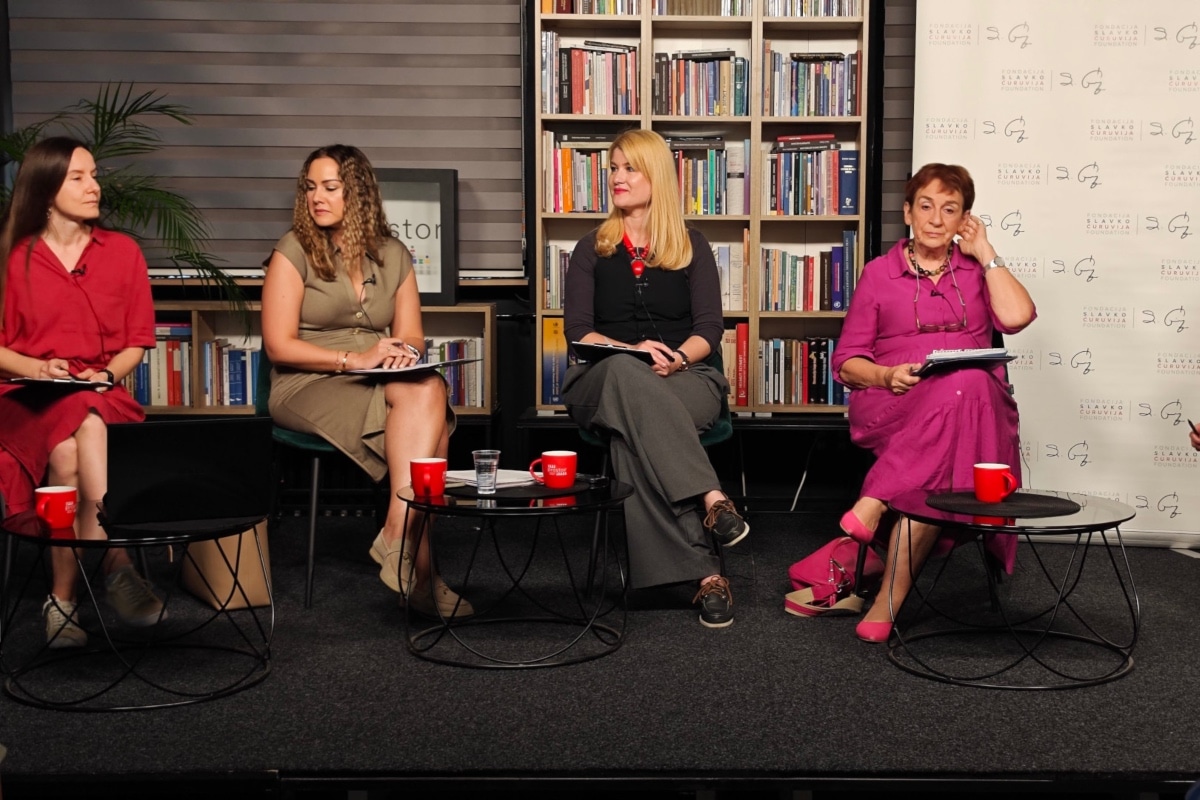
The authors present the report on freedom of expression in Serbia. Photo. Radmilo Markovic/BIRN.
Journalists and media outlets in Serbia filed a record-high 134 criminal complaints in 2025 related to offences committed against them, says a new report on press freedom in Serbia. Of all the cases opened last year, only three resulted in convictions, while most were dismissed.
“Violence, threats, hatred, and hate speech [against journalists] have grown so much that they have simply become part of everyday life and are becoming normalised, which is terrible for a country striving to uphold the rule of law,” said Vida Petrovic Skero in Belgrade on Wednesday while presenting the Report on the Protection of Freedom of Expression in the Judicial System of Serbia. Petrovic Skero is a prominent retired judge in Serbia and one of the report’s authors.
The report – published by the Slavko Curuvija Foundation, a non-profit organisation focused on media independence and responsibility – analyses the legal protection of journalists from 2024 through the first three months of 2026.
Miljana Trifkovic, co-author of the report, said that the scale of violence against journalists during this period “has become alarming and extremely concerning”, especially after the start of the mass protests across the country that set off in response to the collapse of a canopy at the Novi Sad railway station in November 2024 that left 16 people dead.
“The reaction of the authorities, which in some cases was almost entirely absent, is more likely to encourage than to discourage and deter potential attackers of journalists,” she said.
The report also analyses the increase of complaints filed against publications, particularly tabloids and pro-government media, that regularly breach the Serbian Journalists’ Code of Ethics and that participate in smear campaigns against government critics and independent media.
The analysis of the cases shows that pro-government media are increasingly using hate speech, sensationalism and defamation and that they have repeatedly breached the presumption of innocence and the right to privacy. The trials against them usually last around two years, while the average amount of damage they are ordered to pay is around 80 euros.
“Lengthy proceedings result in compensation that is insufficient to prevent future abuses, and the question also arises as to the extent to which such low amounts provide adequate redress for the violation of rights,” the report states.
In cases launched against independent or investigative media, which rarely violate the Code of Ethics, the courts more often assign high damage amounts. The report notes that “disproportionately high claims for damages are one of the criteria taken into account when assessing whether a lawsuit constitutes a SLAPP”.
SLAPPs are lawsuits, usually launched by people in power, aimed at draining the financial and psychological resources of critics.
The report also notes that Serbia is yet to align its laws with EU regulations that would enable the country to dismiss these lawsuits early and put the financial burden of the trial on the accusers.