Anterra Capital, an Amsterdam-based specialist venture firm investing in food and agriculture, has announced the first close of its Fund III at €86 million ($100 million), against a target of €172.1 million ($200 million). Anterra’s investor base spans institutional investors, food system operators and industry innovators across North America, Europe
 Rahul Raj



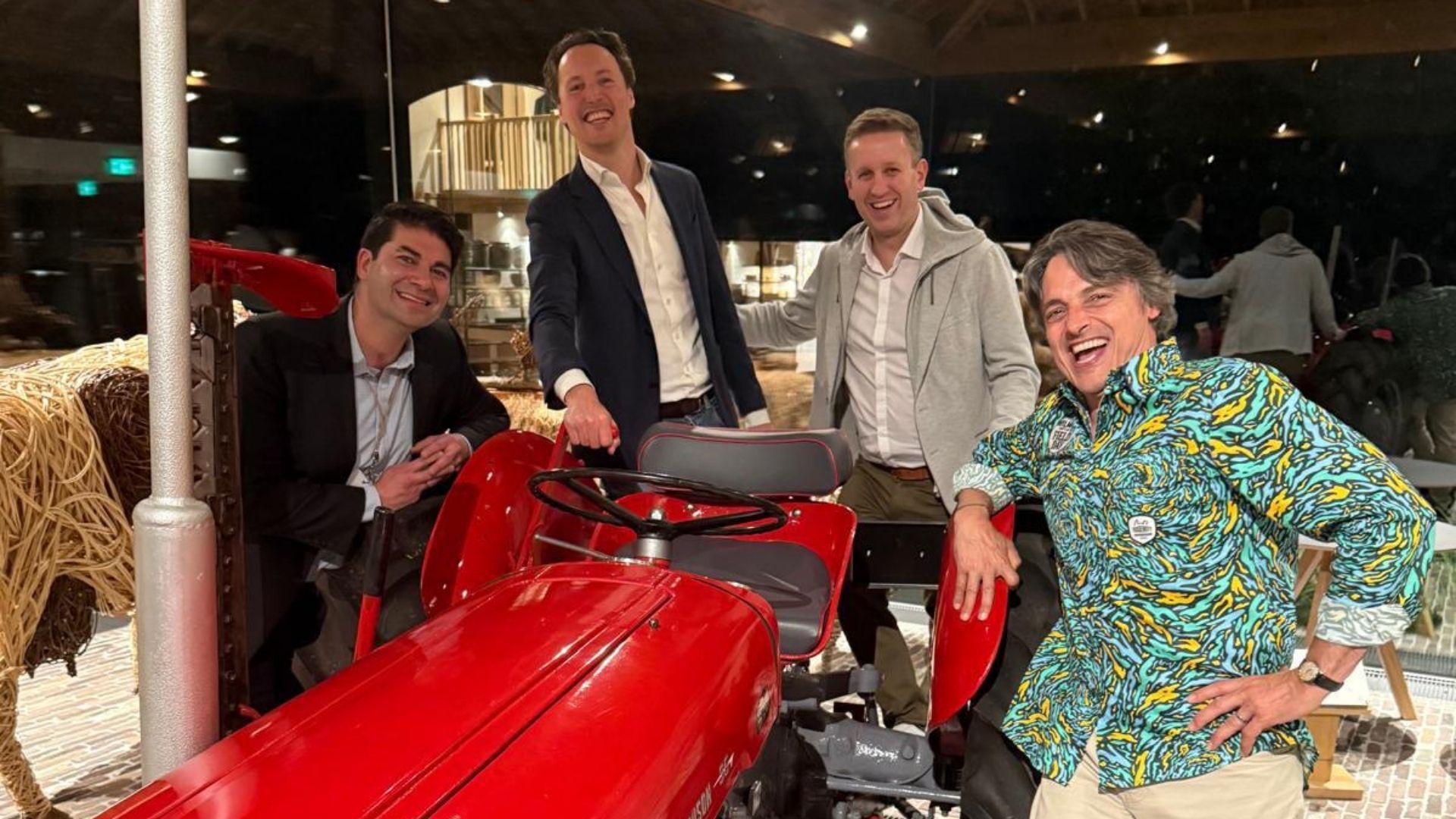
Anterra Capital, an Amsterdam-based specialist venture firm investing in food and agriculture, has announced the first close of its Fund III at €86 million ($100 million), against a target of €172.1 million ($200 million).
Anterra’s investor base spans institutional investors, food system operators and industry innovators across North America, Europe and APAC, including Rabobank, Novo Holdings and Zoetis, among others. Operators in the LP base collectively farm more than 13 million acres and include leaders of some of the world’s largest CPG, bakery, produce logistics and food retail businesses.
“The vote of confidence from our investor base is what gives this close its weight. “The combination of leading global asset managers, the institutions that know our sector backwards and the operators who farm millions of acres all backing the same thesis is an unrivalled force supporting the Anterra portfolio,” said Adam Anders, Partner at Anterra Capital.
Founded in 2013, Anterra invests in and builds companies that apply life-science and software innovations to food and agriculture. The firm manages over €430.4 million ($500 million) across three funds.
According to Anterra, food and agriculture remain the largest industry on the planet, valued at roughly €8.6 trillion ($10 trillion) and employing around 1.3 billion people, nearly 40% of the world’s workforce.
The firm reports that global investment in food and agriculture technology reached a record high of nearly €44.7 billion ($52 billion) in 2021, then declined to about €13.7 billion ($16 billion), close to 2016 levels. It states that much of that generalist capital supported ambitious, capital-heavy ventures that did not scale successfully: indoor vertical farms, plant-based processed meat alternatives, and 10-minute grocery delivery.
Anterra’s approach involves backing science-backed companies built on real unit economics and designed to scale through existing industry channels. That retreat of capital from hype back to fundamentals is precisely what now opens the door for disciplined specialists.
Maarten Goossens, Partner at Anterra Capital, “The firm has now successfully navigated two capital cycles in food and agriculture. Each one rewarded the same discipline: backing companies that deliver real returns for their customers and to their investors. What’s different this time is that the real-world industries we operate in — large, complex and historically resistant to change — are now ready to be rewired, and the tools to do it have arrived.”
The firm notes that AI’s impact runs deepest in the industries the last generation of software never reached: those that still rely on manual workflows, fragmented data and analogue infrastructure. Among these, food and agriculture are the largest.
“Two engines are now firing at once: vertical AI, the fastest-growing category in enterprise technology with investment tripling in a single year, is finally digitising how these industries operate; in biology, AI is compressing R&D timelines, shrinking teams and slashing the capital needed to reach a first commercial milestone — unlocking a generation of opportunities that were previously out of reach for venture capital The capital cycle has cleared the noise. And Anterra has spent twelve years building the knowledge and relationships to deploy into both,” Anterra mentioned in the press release.
Anterra’s investment thesis has remained steady across two funds. Now, with valuations reset and AI transforming the economics of building in software and biology, the firm notes that the moment has finally arrived to deploy it at scale.
Anterra’s first two funds have produced multiple exits, including one of the largest exits ever in early-stage veterinary medicine, a Nasdaq IPO, and several other acquisitions by industry-leading strategics across the value chain.
The firm’s core modus operandi involves company-building, deployed where the firm identifies white space that the market has not filled. Its first company creation, Enko Chem, is discovering and developing next-generation crop protection chemistry through rational design to replace old, ineffective and unsafe products such as glyphosate. It has partnered with key industry leaders, including Syngenta and Bayer Crop Science.
Another Anterra-built company, Invetx, applied proven biological approaches from human medicine to veterinary medicine. Founded in 2018, it was acquired by Dechra Pharmaceuticals for over €430.3 million (half a billion dollars) within 6 years of inception.
Fund III has already made two investments. It has backed Anchr, an AI-native platform modernising the back office of food distribution, alongside a16z Speedrun. The fund’s second investment is Animerra, a veterinary biologics company founded and built by Anterra.
“We’ve spent twelve years and two funds proving you can build category-defining companies in food and agriculture — and generate real returns doing it. What’s changed is that the world has finally caught up to that thesis. The technology is here, the valuations make sense, and the founders building in this sector are the best we’ve ever seen. This is the most exciting moment in our firm’s history, and Fund III is how we intend to make the most of it,” said Brett Wong, Partner at Anterra Capital.