Protesting Albanians are not against tourist resorts or foreign investments, but they’re tired of being treated as passive subjects of decisions made by higher powers.
 Jezerca Tigani



Every time I visit Albania, the conversation is the same – not about politics, the elections, the new airport or the promise of EU accession. It’s about leaving it. For the last few years, an apathy, a collective shrug, has settled over a country that has been told for decades that its future lay somewhere else.
That’s why the flamingos stopped me in my tracks.
When the videos appeared in late-May of bulldozers tearing through the protected wetlands of Zvernec, of private security guards dragging a protester across the sand while police watched, of barbed wire going up along the coastline, I waited for the familiar Albanian response: the sigh; resignation; the quiet comment that this is just how things work here – that nothing ever changes – that the people who matter have already left.
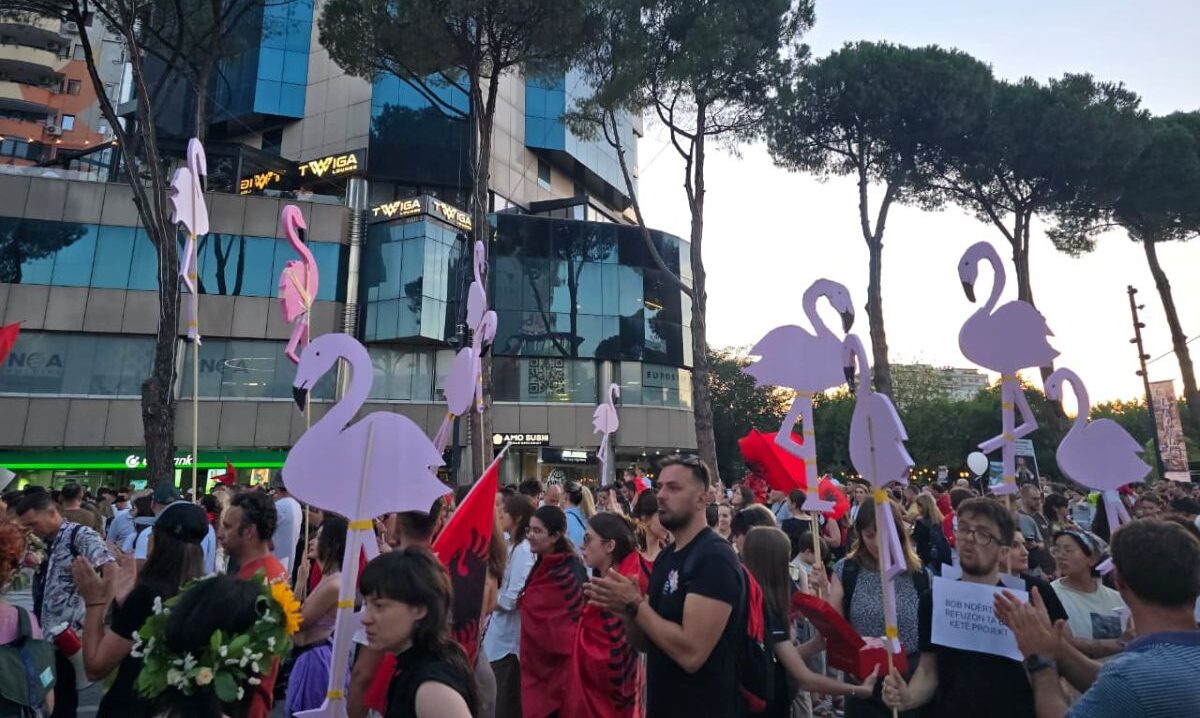
Instead, thousands took to the streets of Tirana. And then thousands more. And then, solidarity protests erupted across Europe and North America, from the Albanian diaspora, the very people who had left, watching from afar and finding, perhaps for the first time, a cause that pulled them back.
They carried inflatable pink flamingos and banners that read: “Albania is not for sale”. They did not look like people who had given up.